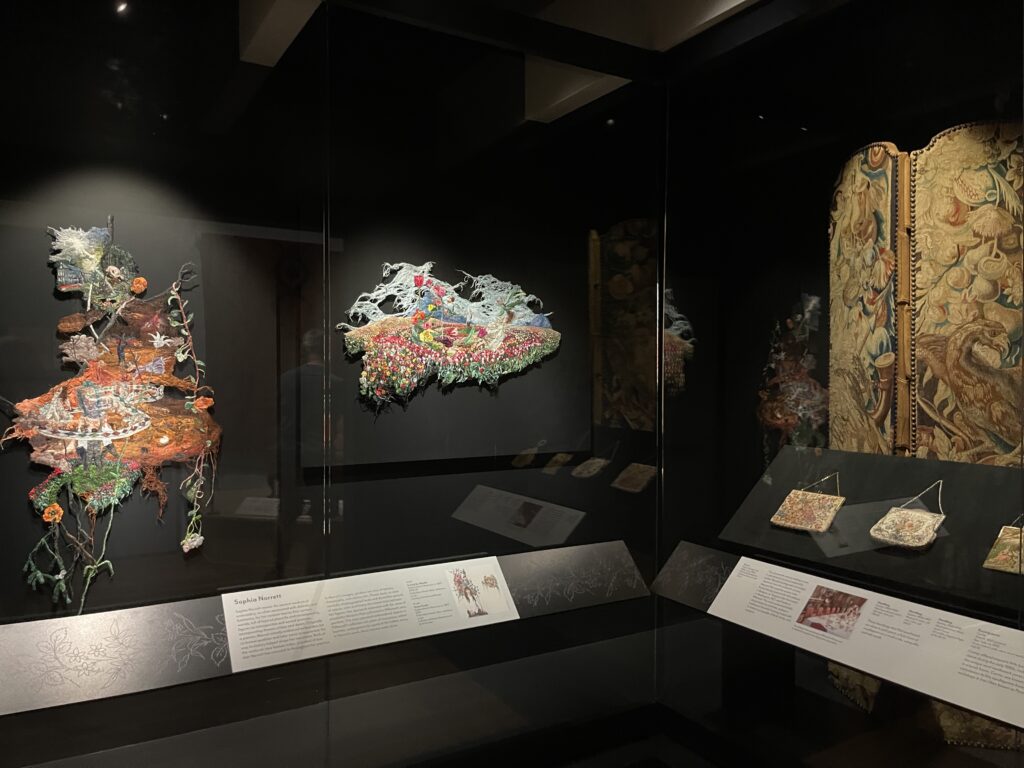
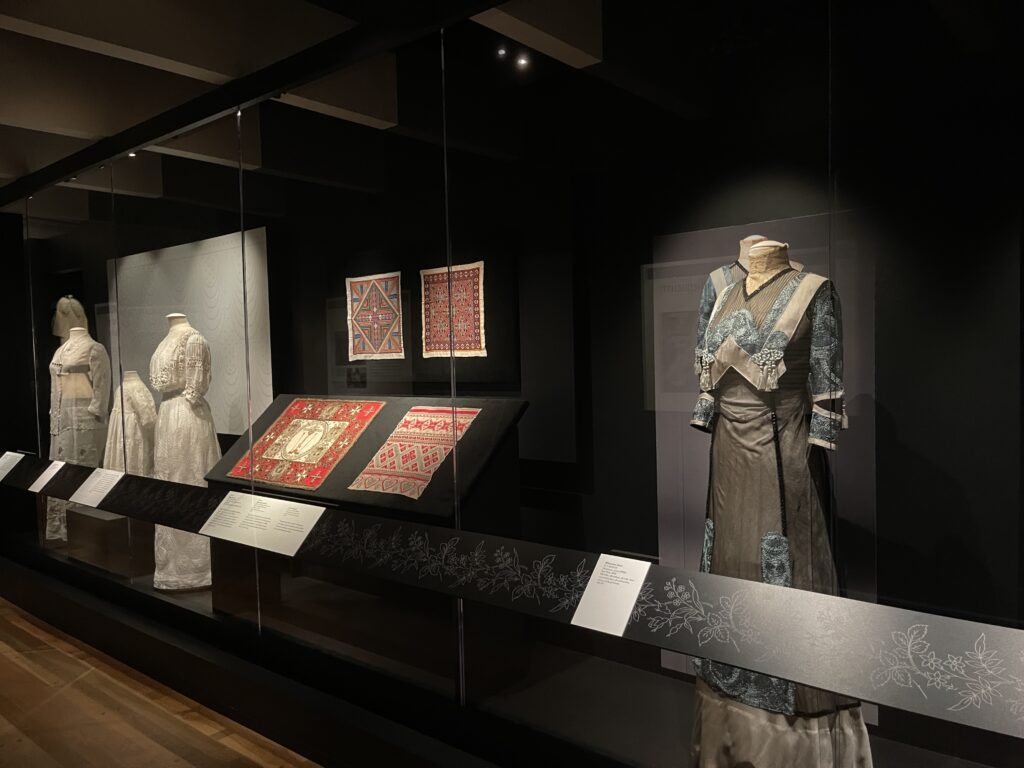
The title alone feels comforting, reassuring that what we do every day, with whom and with which materials, are all interrelated, interlaced, intertwined and ON VIEW NOW!
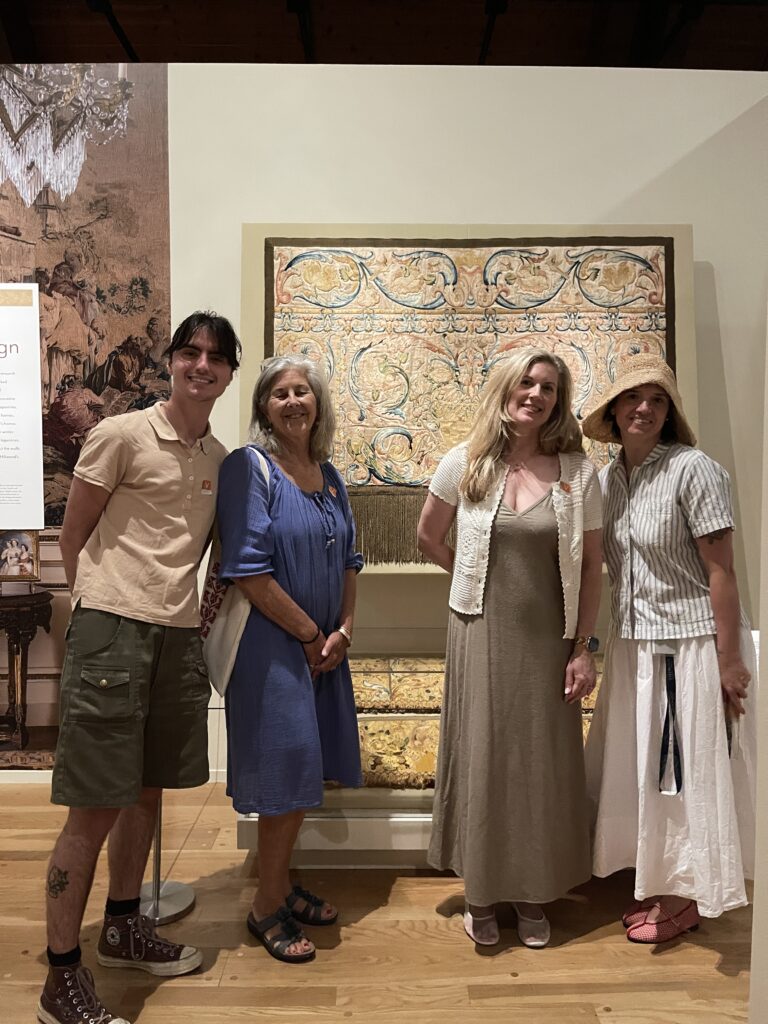
It was a huge privilege to be intimately intertwined with Hillwood over the past year, conserving and preparing many of the textiles on display in this exhibition.
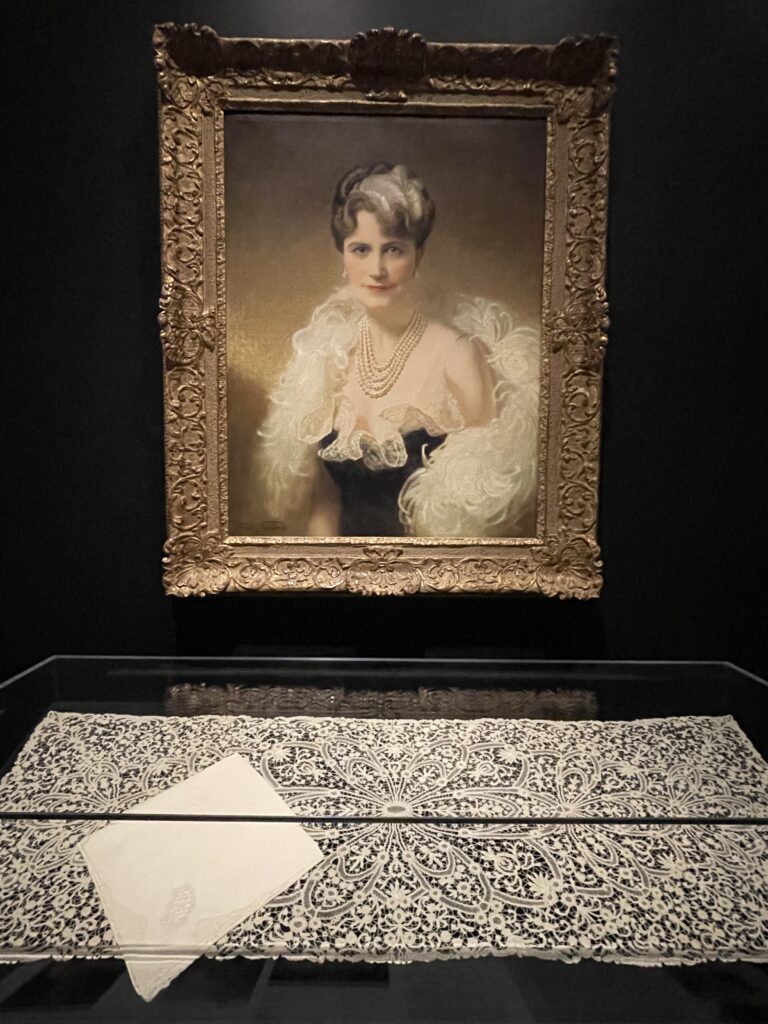
Curator Megan Martinelli, has deftly chosen treasured textiles of Marjorie Merriweather Post; furnishing fragments, bits of lace, cherished embroideries, quilts, baby clothes, high church vestments, and relics, all of which are now preserved in the museum collection. Some were cut apart, remade, refashioned into other accessories or furnishing, but never thrown out or forgotten.
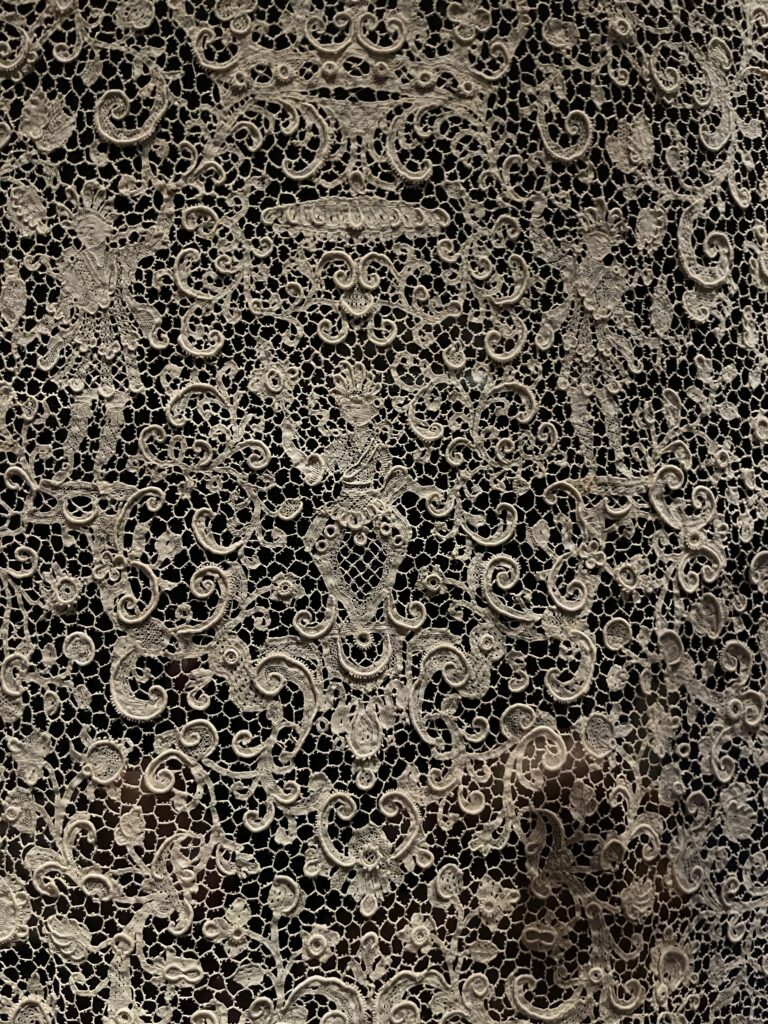
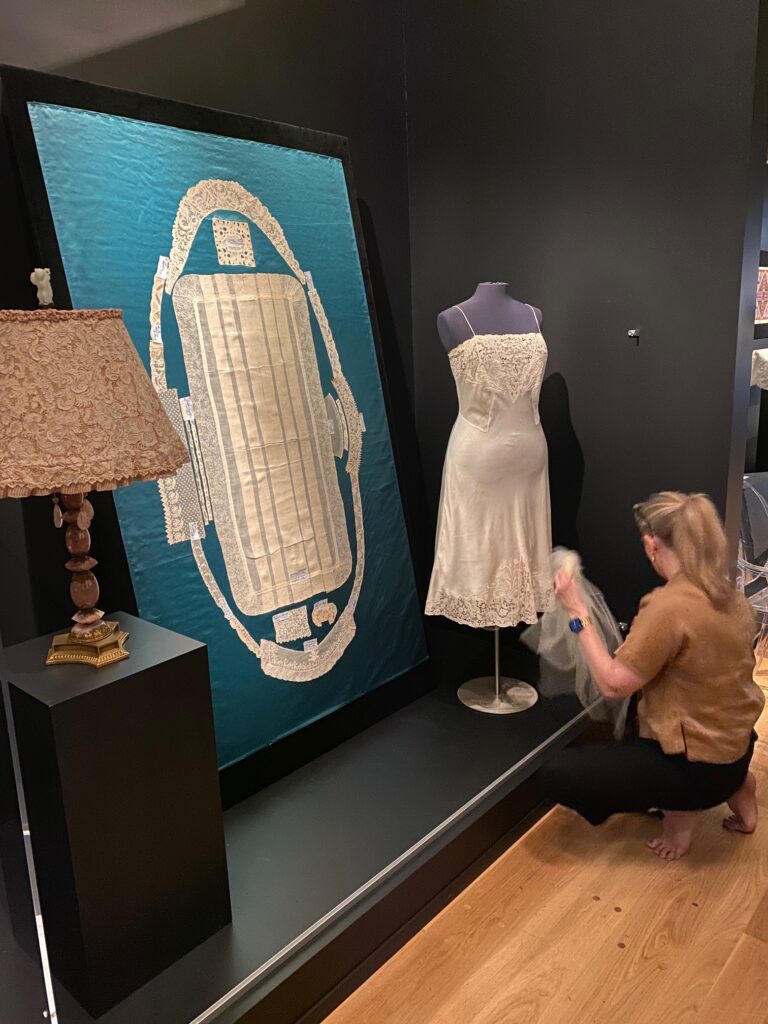
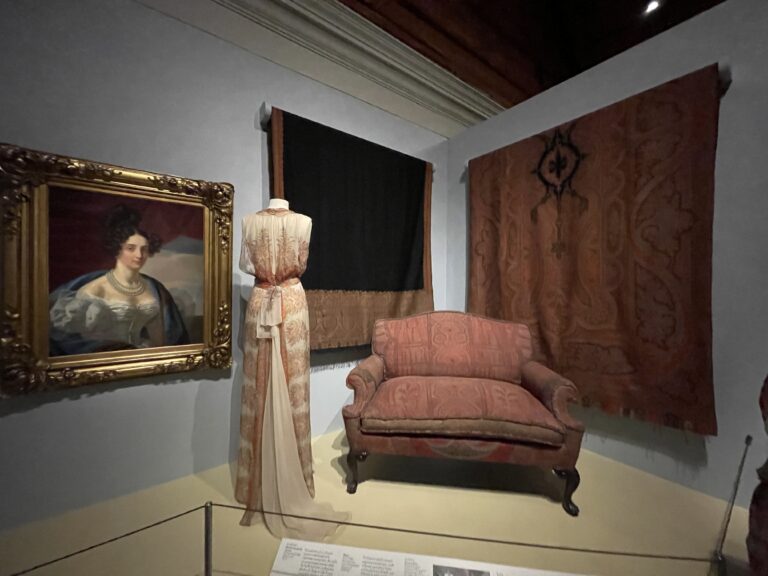
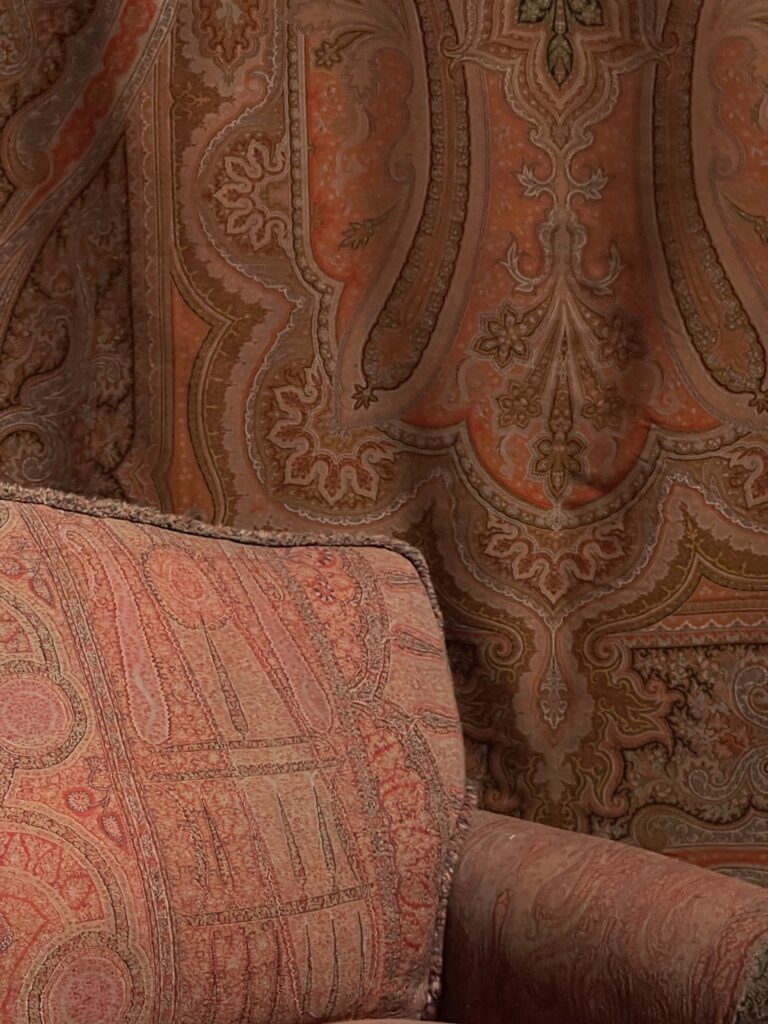
The selection reveals Mrs. Post’s deep knowledge and love of textiles, and her lifelong pursuit of reusing, refashioning and saving beloved fabrics – as seen in her use of paisley shawls and quilts for upholstery. For those of you who love lace, there are several stunning examples.
The exhibit is really about textile processes and preservation. What an absolutely perfect philosophical fit with our conservation work; to channel our ‘inner Mrs. Post’, “always trying to extend the life of each textile,” examining and analyzing the structure and embellishments, caring for every type of textile regardless of value or fragmentary condition, employing sensitivity in matching threads and fabrics for patching, and envisioning the best display methods to highlight each textile’s story.

Sharing our treatments, repairs, mounting and installation work.
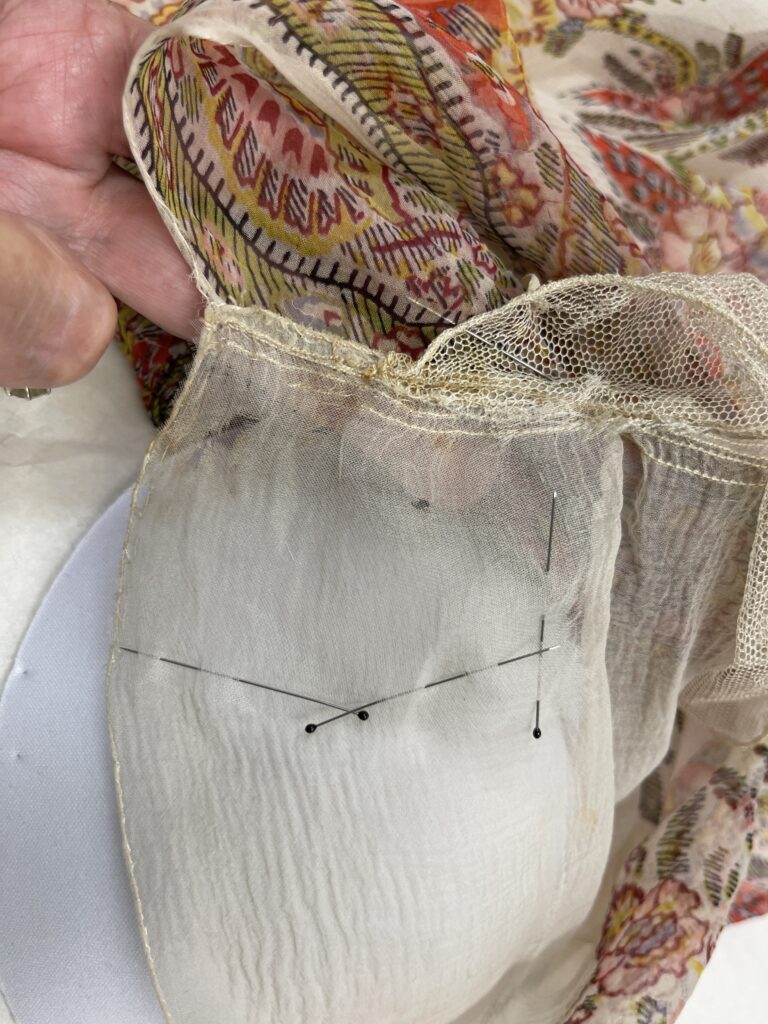
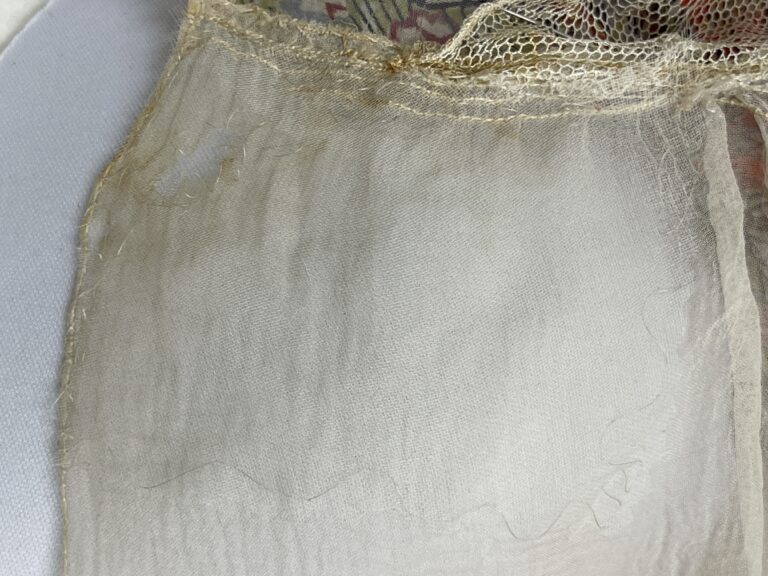
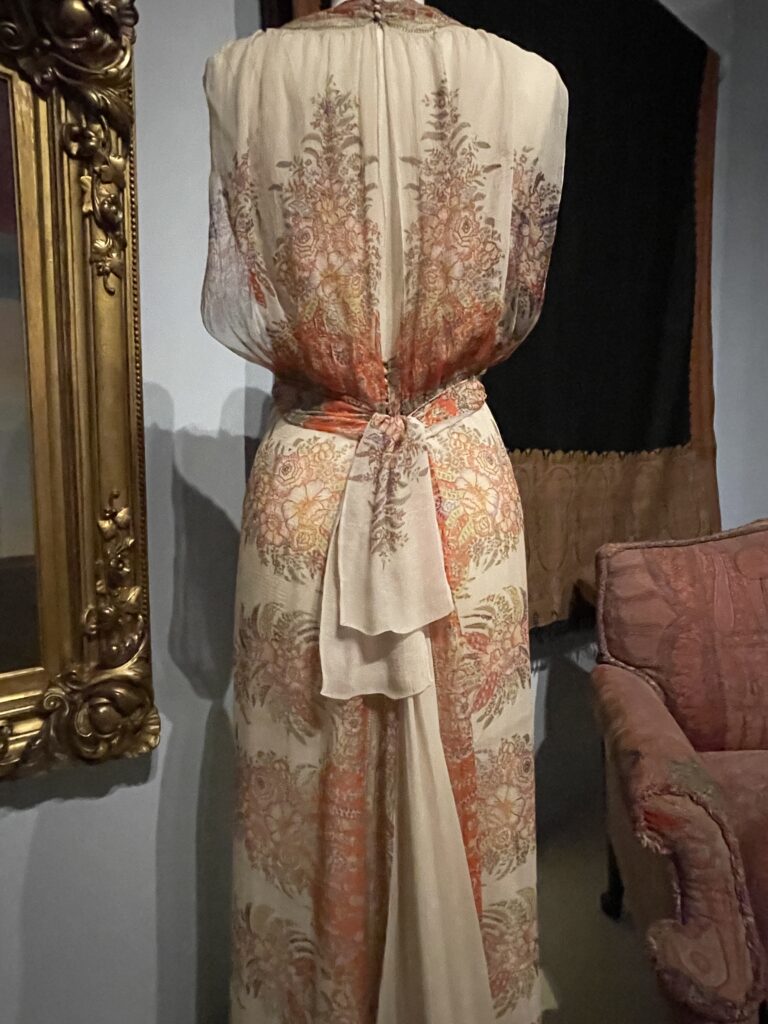
Delicate sheer silk crepeline patch supports were hand stitched to the paisley silk chiffon dress.
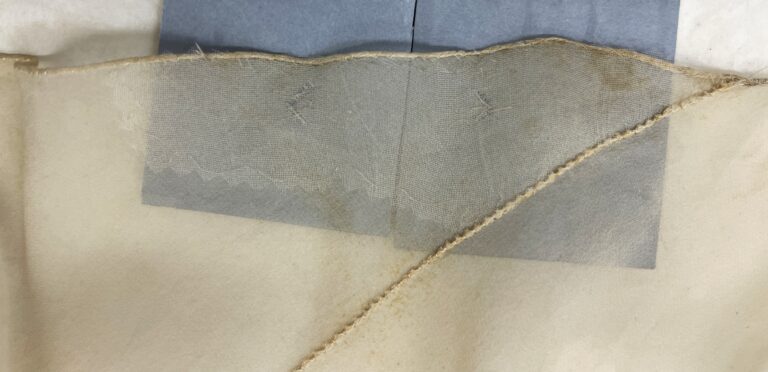
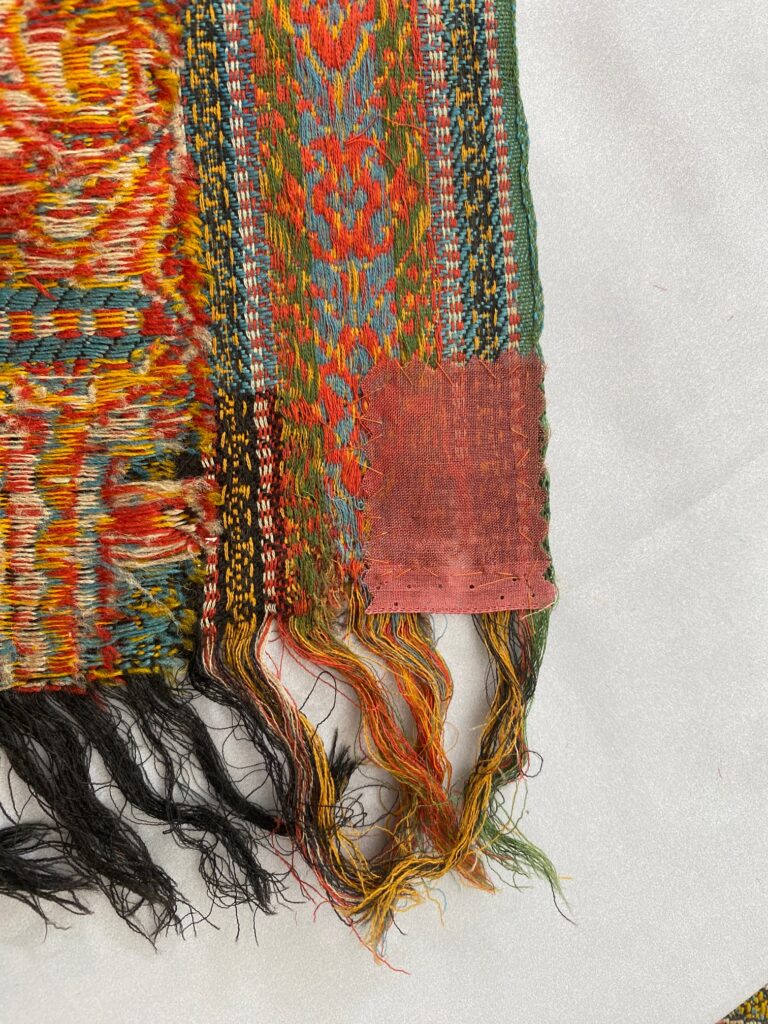
Similar support patches of silk organza supported numerous holes in the large paisley shawls.
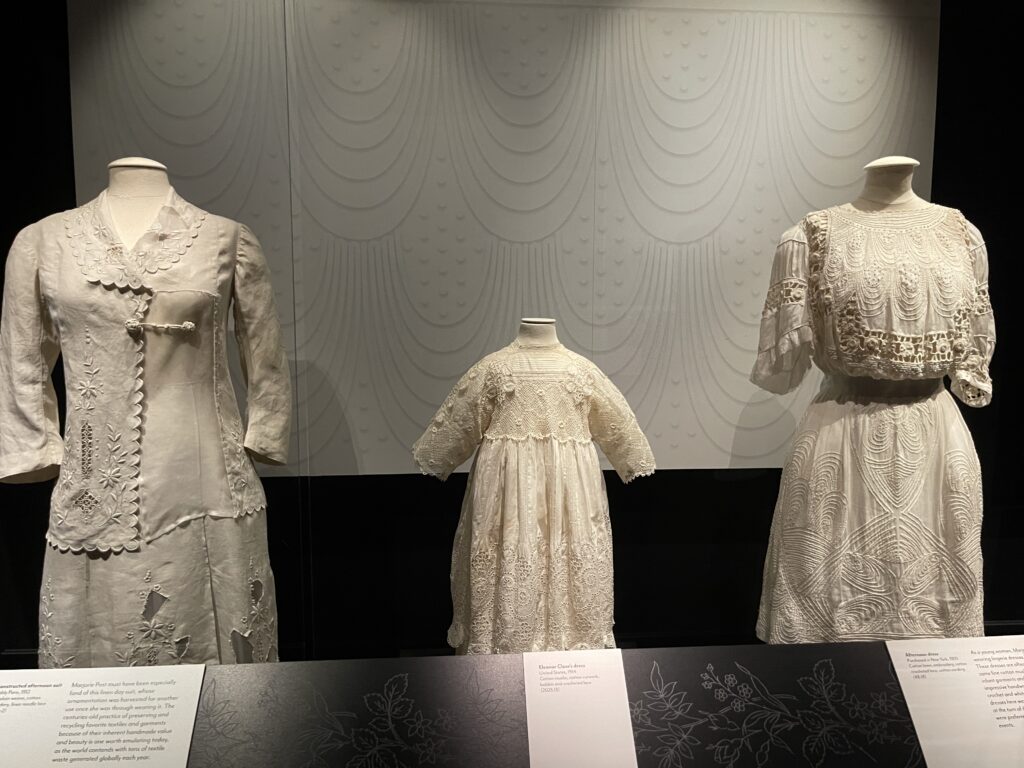
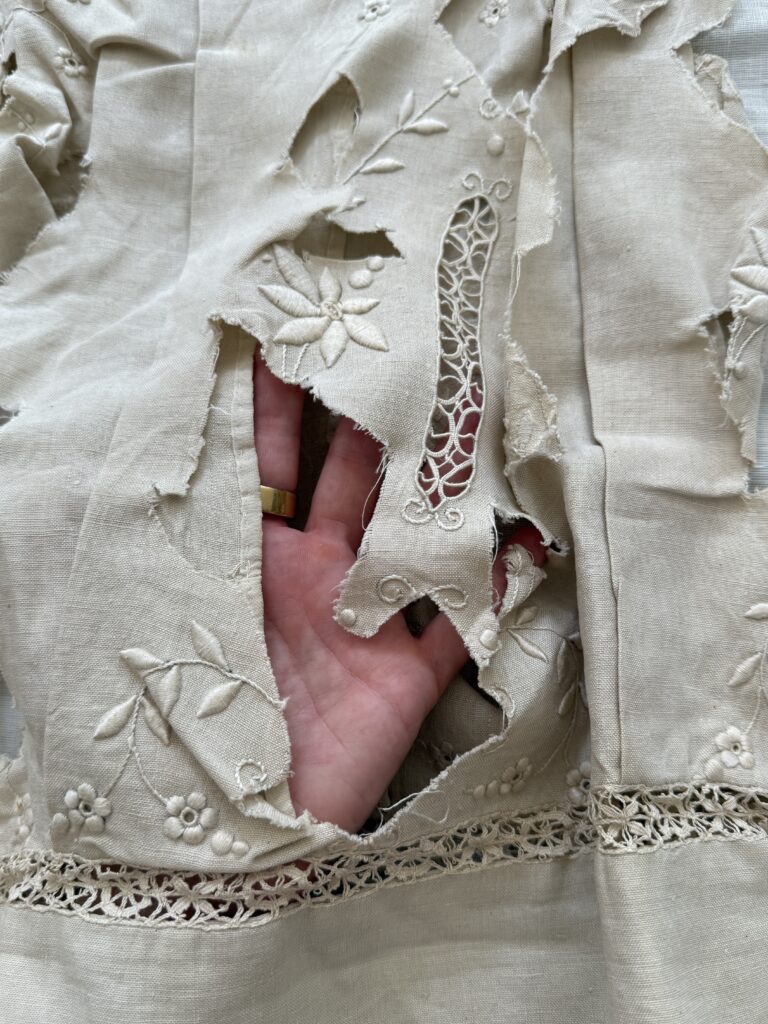
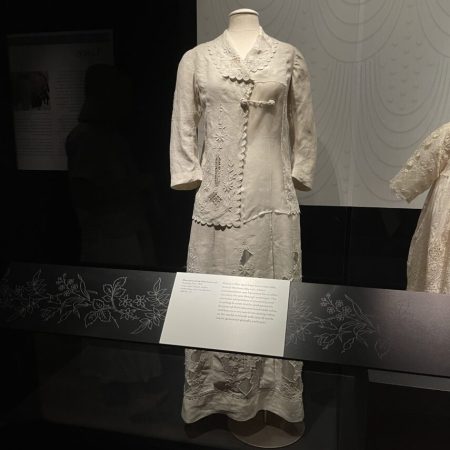
This linen ensemble was extensively cut up by Mrs. Post, yet kept and treasured.
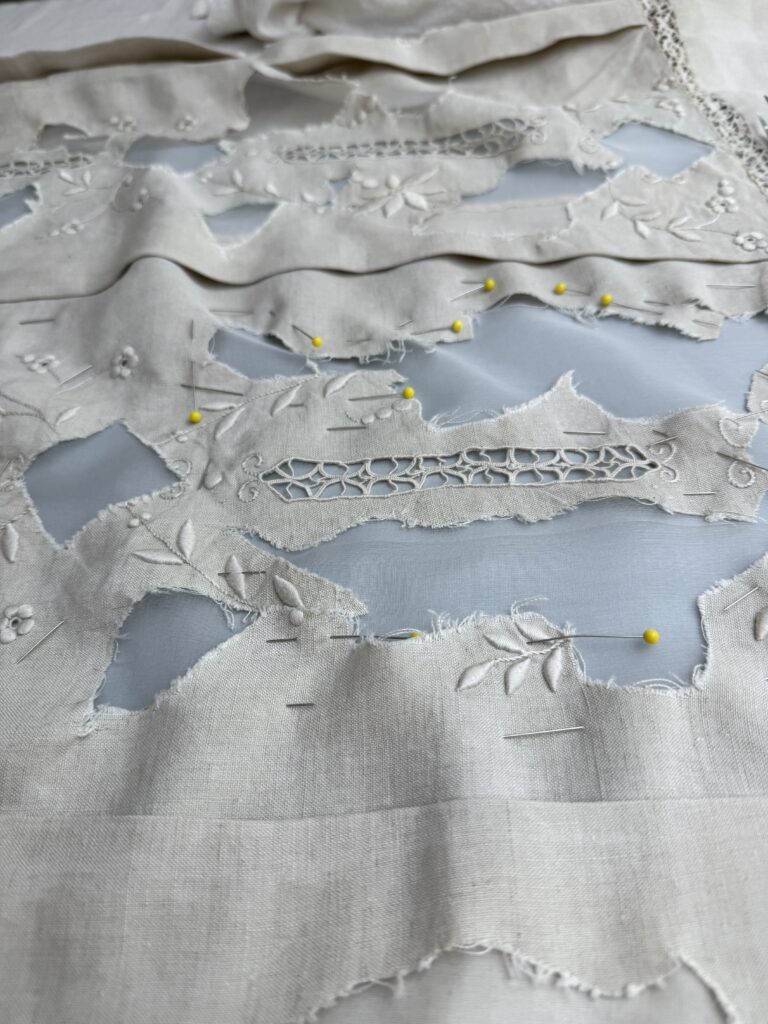
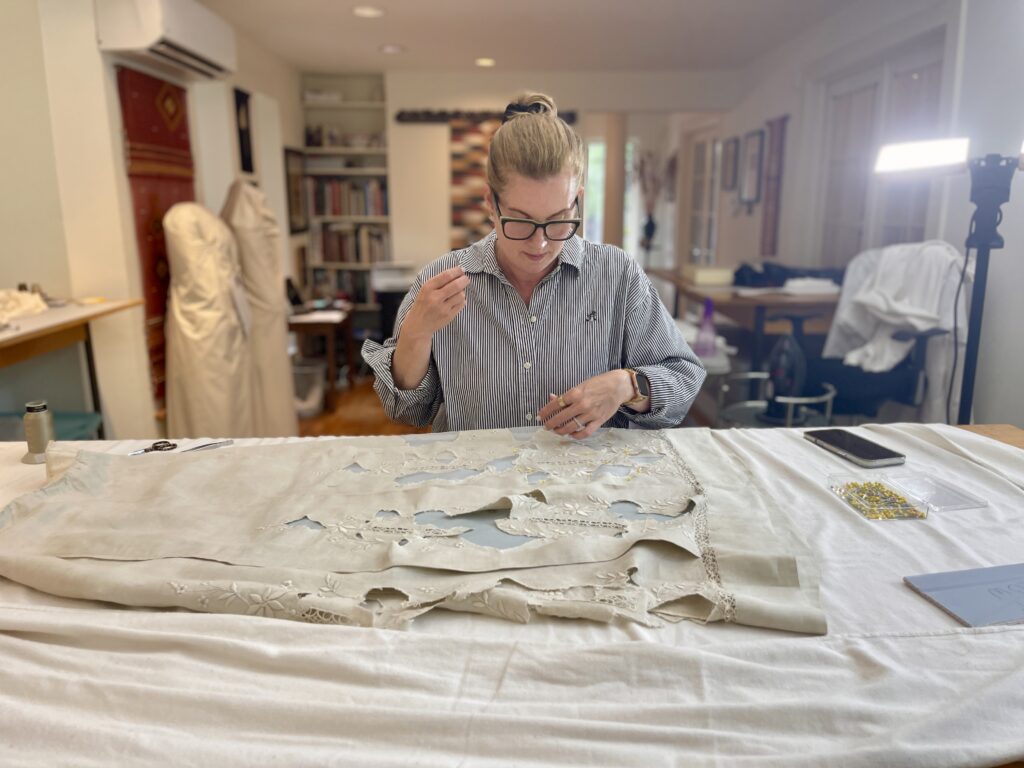
After cleaning and pressing, Katherine inserts panels of semi-sheer silk organza into all the voids, creating a whole holey ensemble.
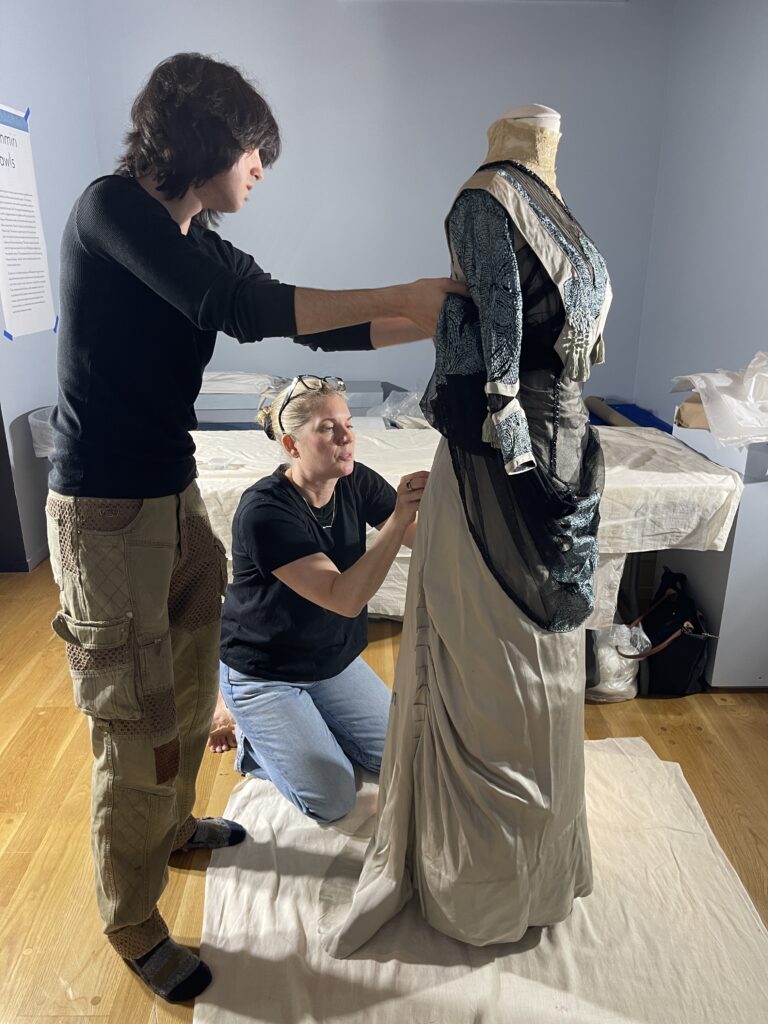
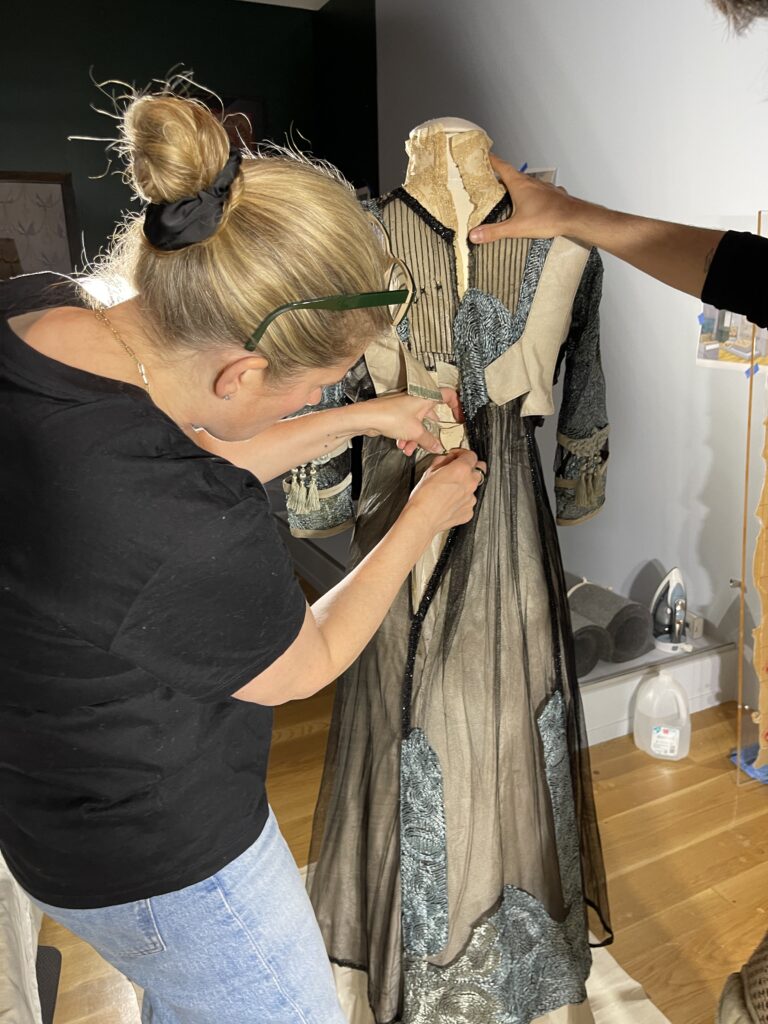
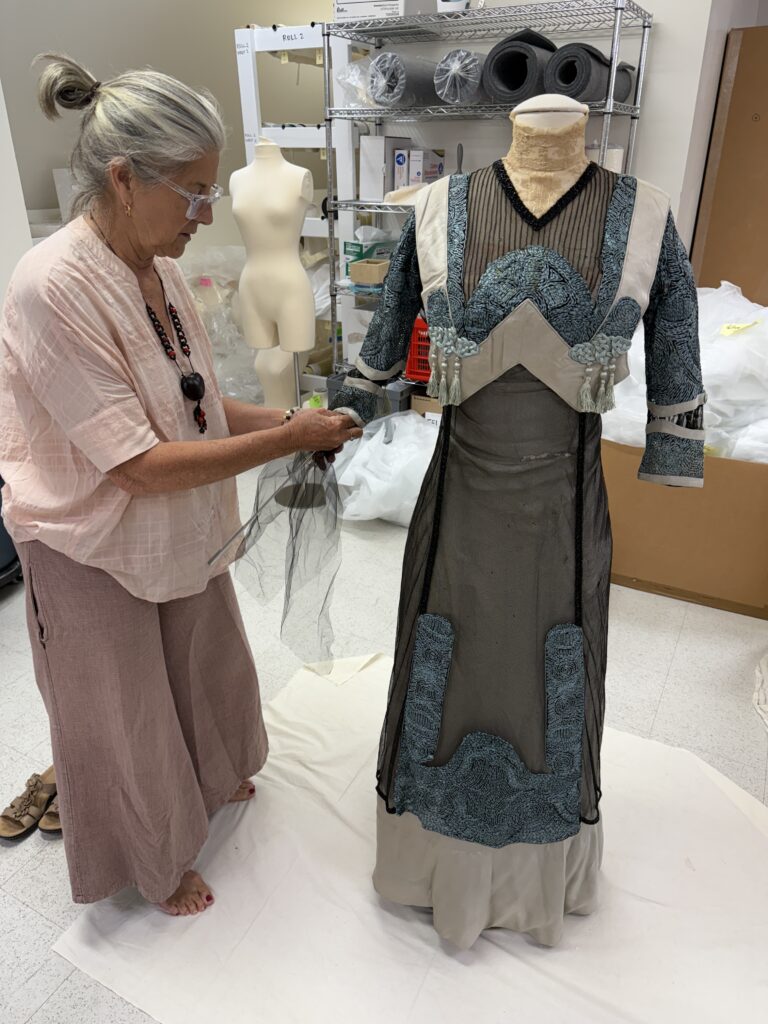
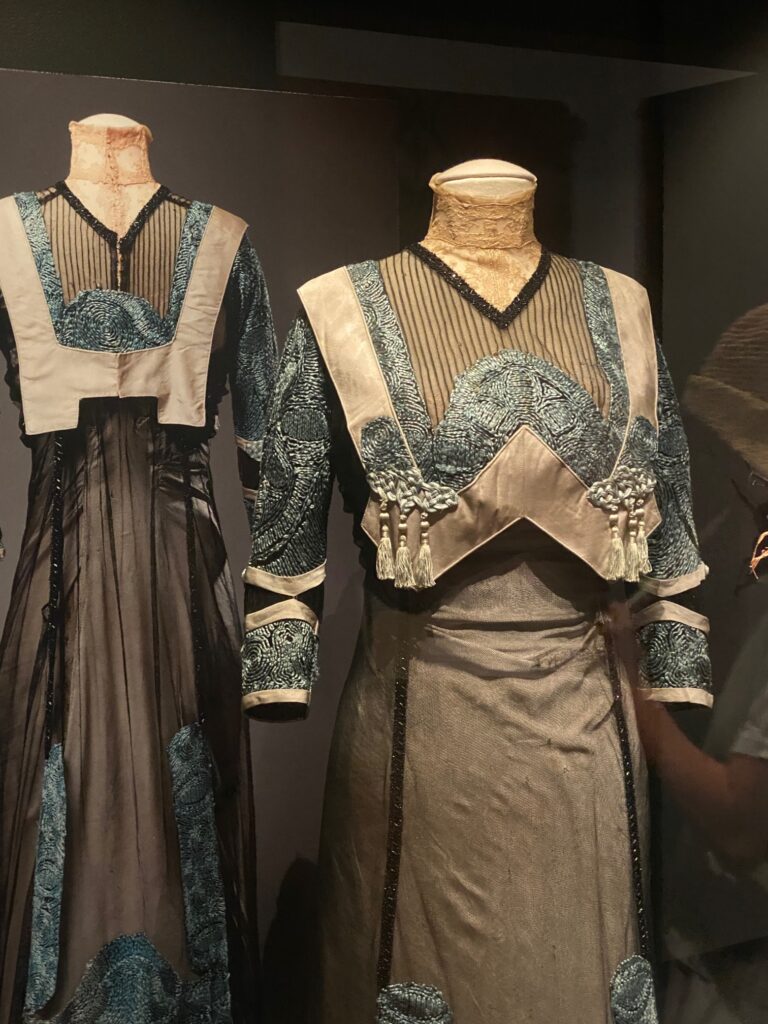
This lovely, unique afternoon dress was incredibly fragile and required many hours of work. CFT staff repaired the shattered silk lining fabric with adhesive patches, reinforced the lace collar with netting, and secured loose areas of the blue silk floss serpentine embroidery.
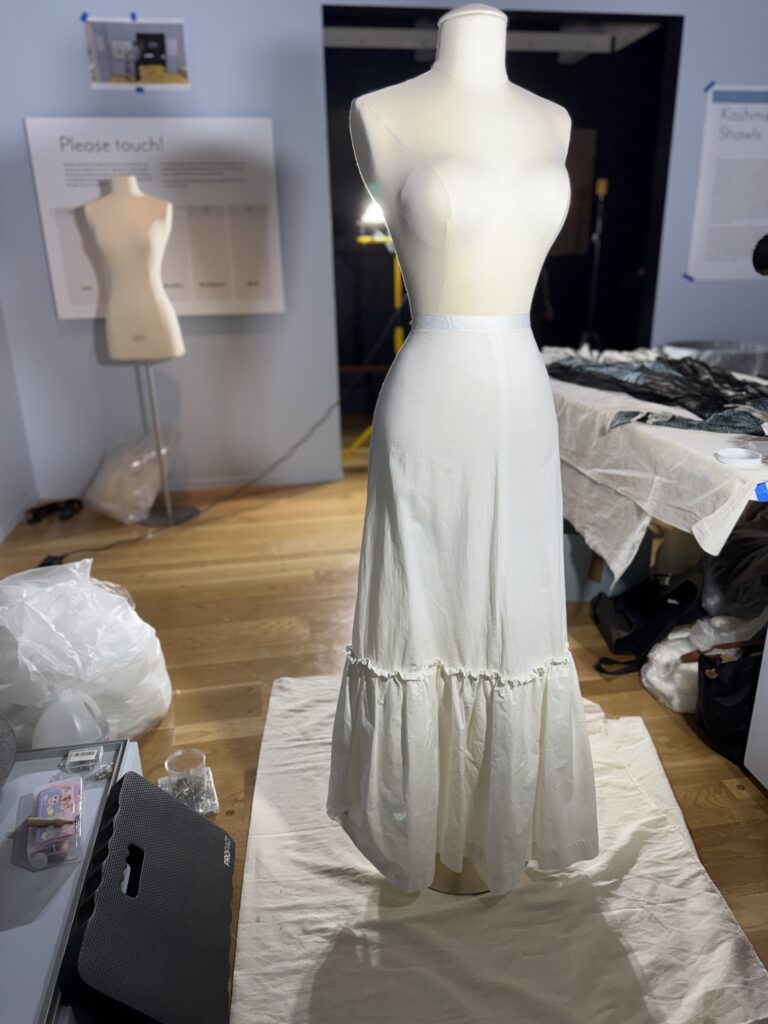
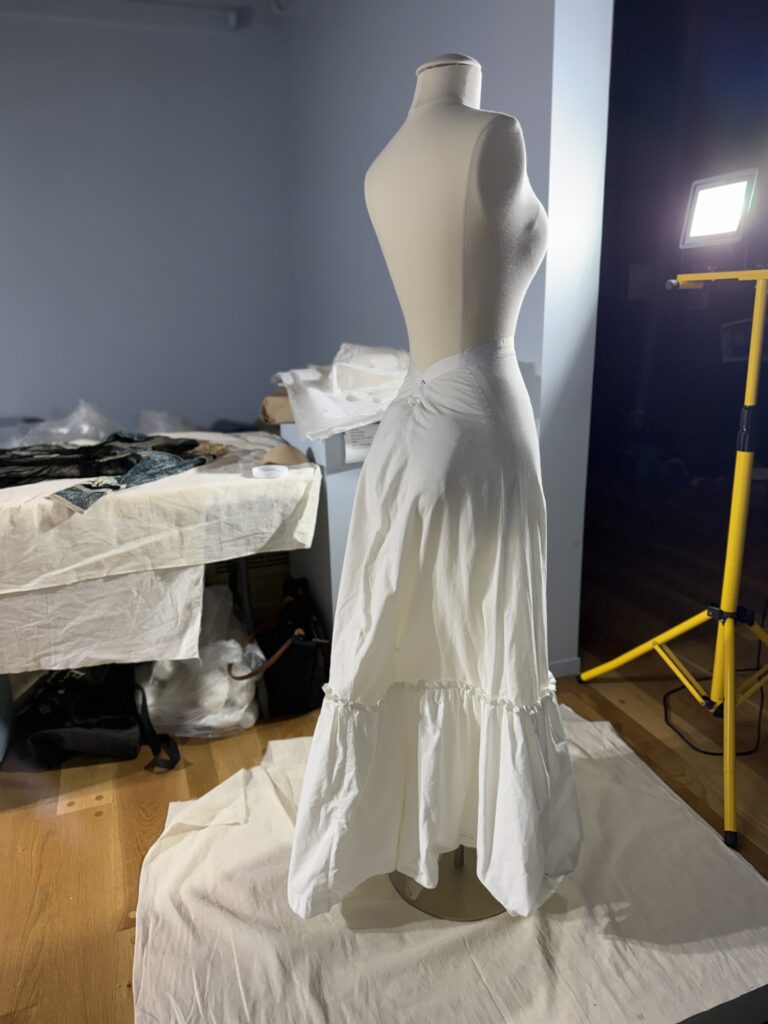
The gossamer netting and silk underskirt is required for the supportive slip underneath to be smooth and structured enough to hold out the asymmetrical train.
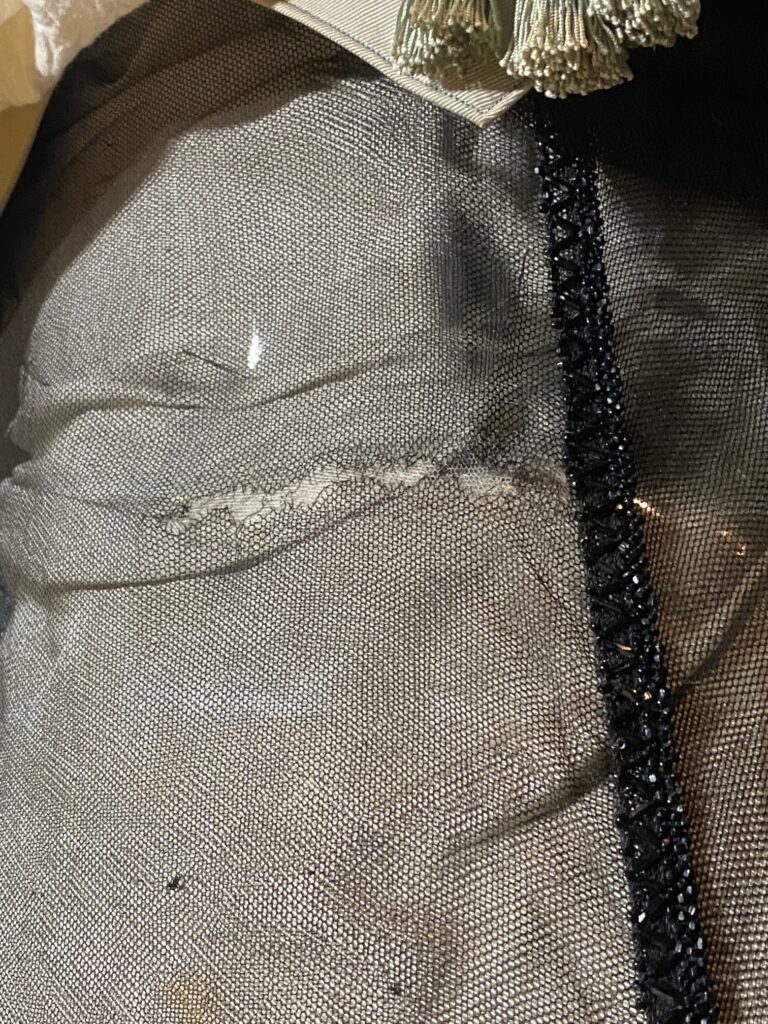
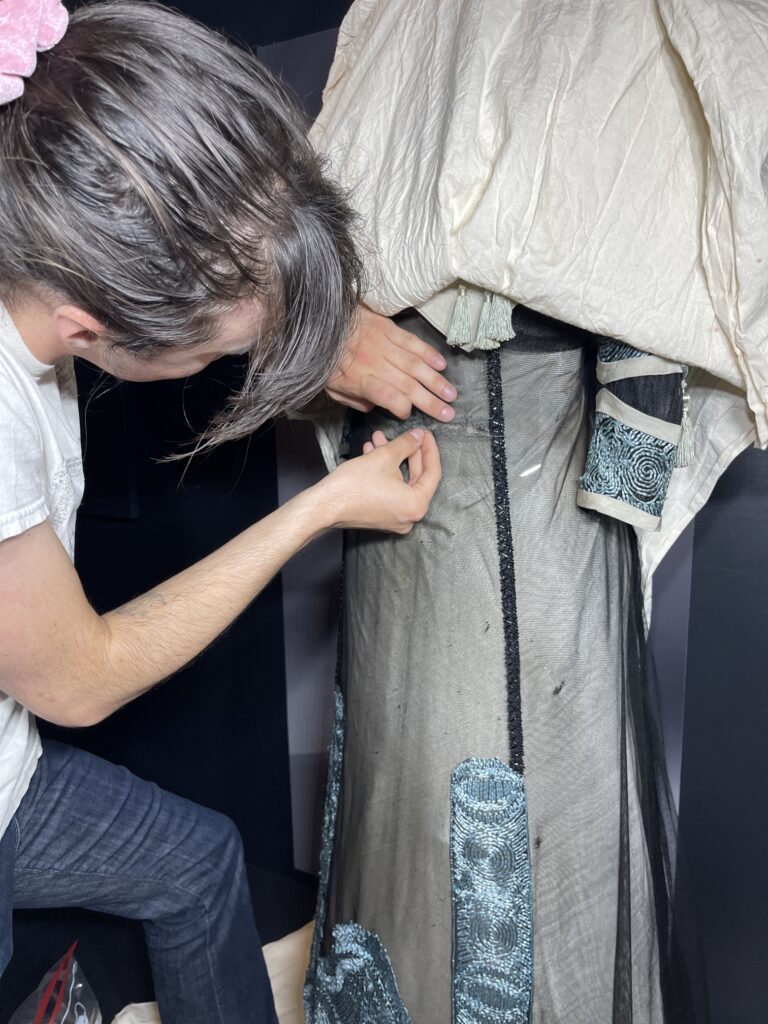
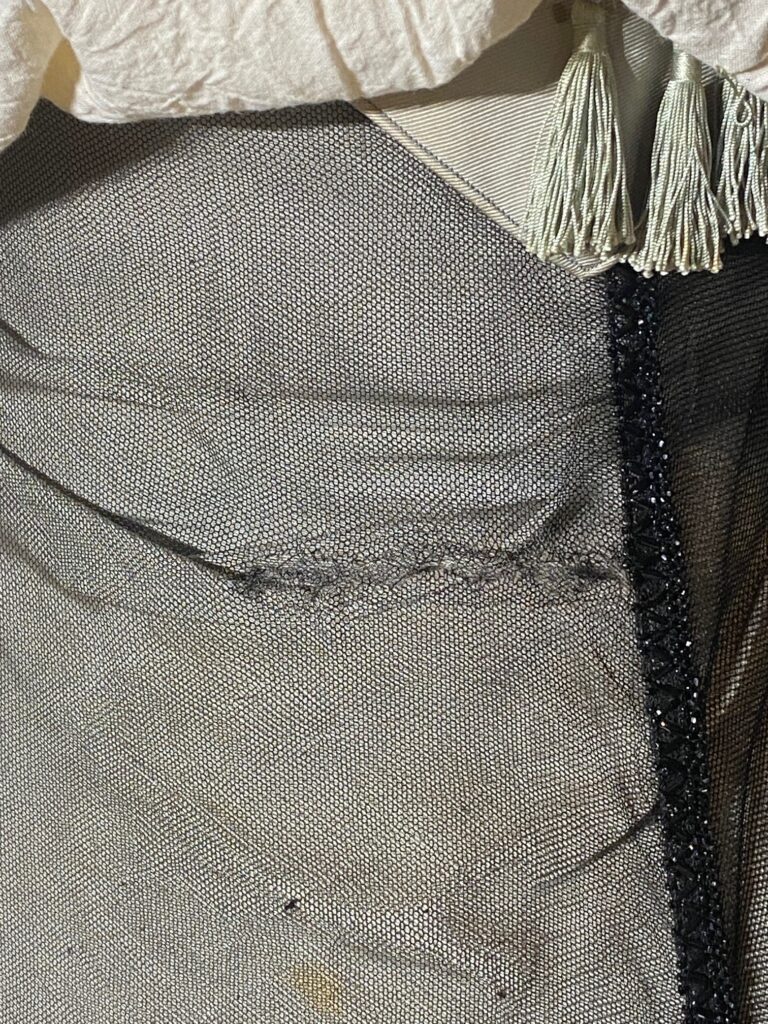
During installation, CFT staff carefully repaired a long tear in the black silk tulle, using overlays of contemporary black silk tulle.
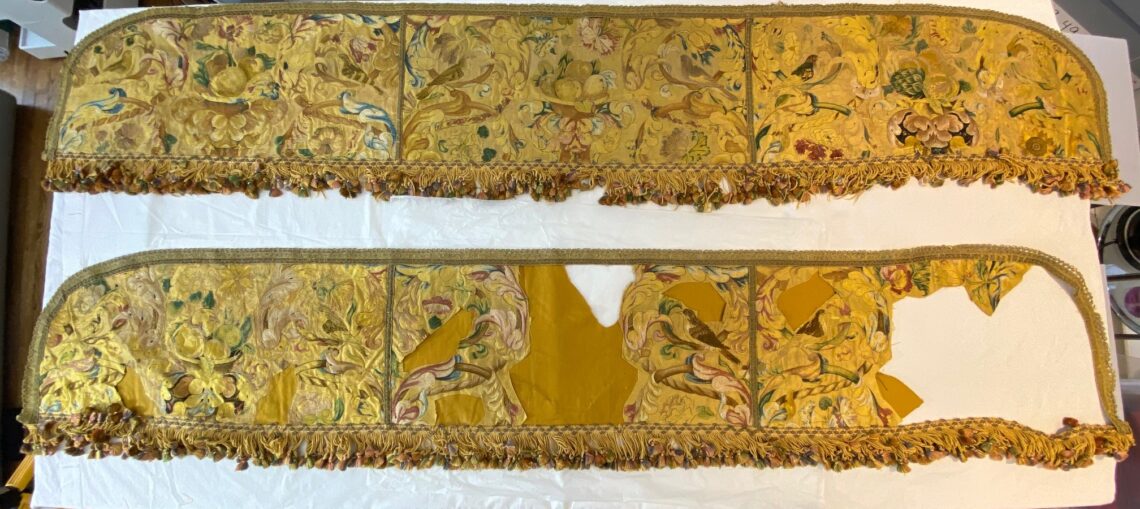
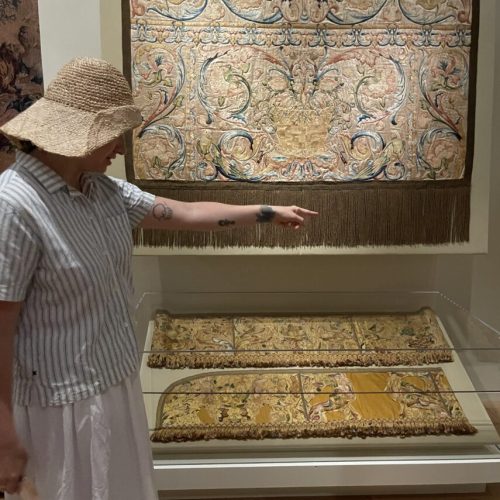
One of these sumptuous embroidered ‘bed panels’ was dismantled by Mrs. Post; she literally ‘harvested’ all the birds for another décor use.
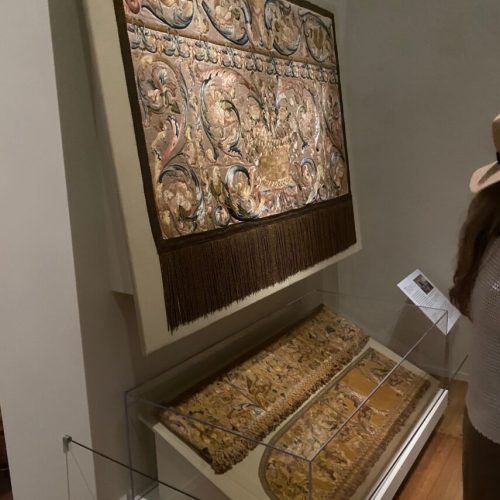
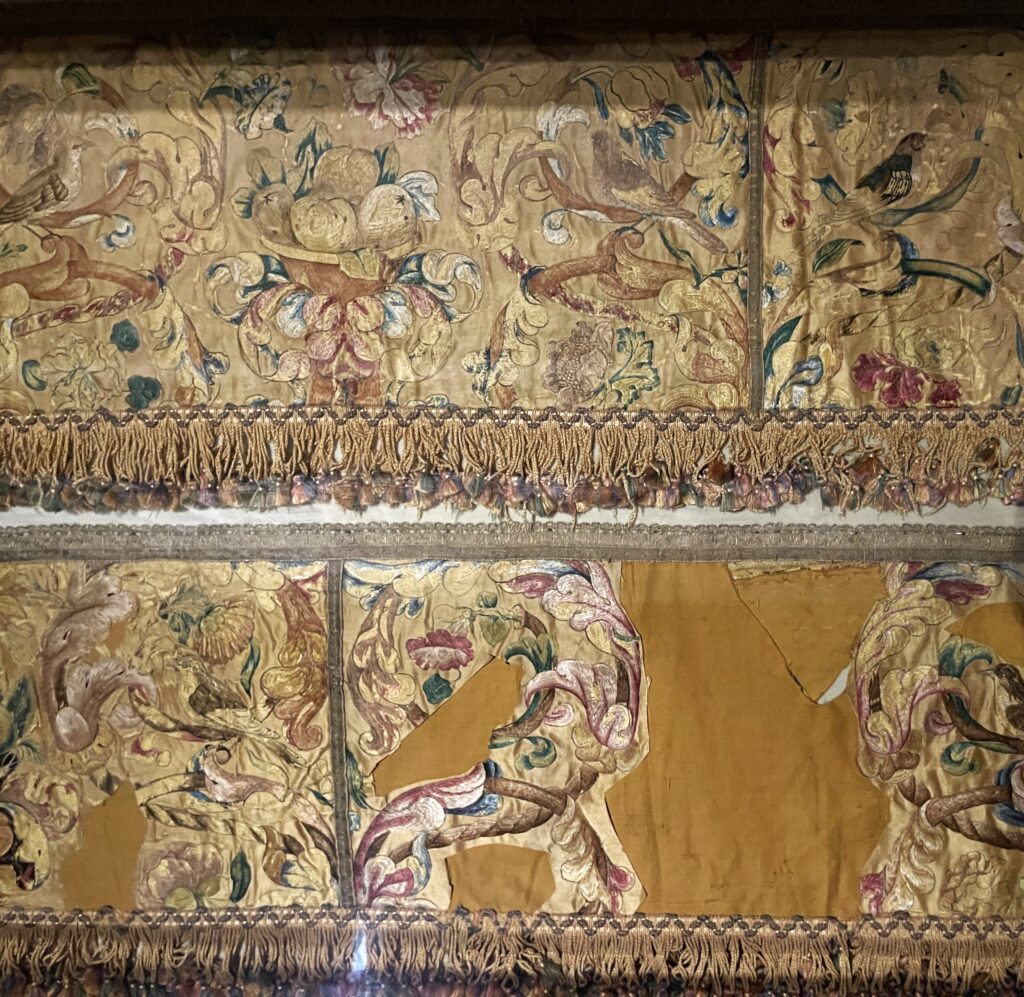
Working closely with the curator, we ‘filled’ the gaping voids by nearly doubling over the panel so that the holes remained visible without detracting from the overall appearance.
The lower bed panel in the above image is folded under to create the illusion of a fabric filling the voided areas. The folded edges are supported with a small roll of batting filled fabric snake for support. The result seen below, gives the visitor a more “whole” impression.
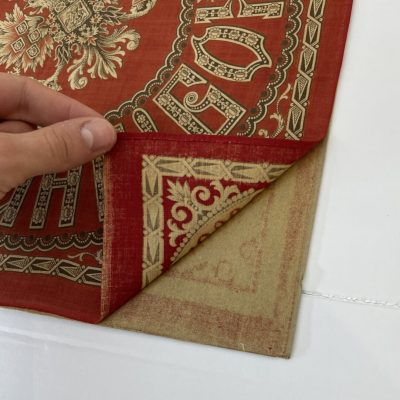
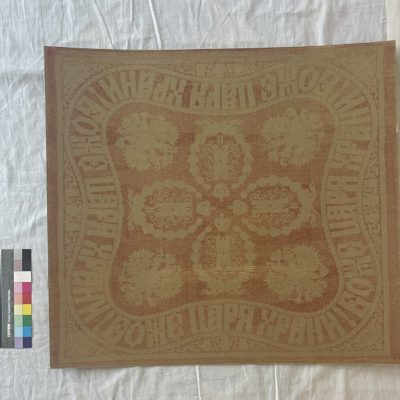
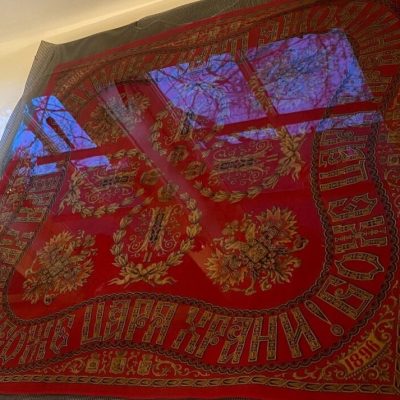
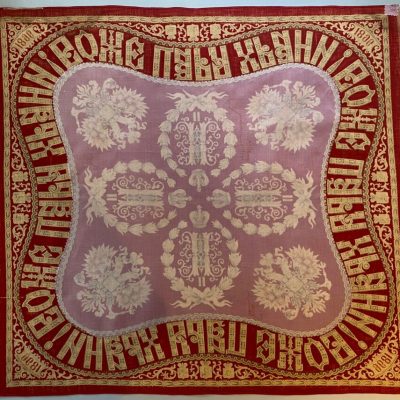
At the time of conservation treatment, we did not know the tragic history embedded in this simple cotton kerchief, which is a souvenir of the royal coronation of Czar Nicholas and Alexandra in 1896. After the coronation, outdoor banquets were to be held for the people of Moscow. Rumors spread that souvenir gifts including food items, a commemorative cup and this cotton hankie would be given out. The rumor further evolved that the cups might be filled with coin; thousands of people gathered nearby in Khodynka Field in anticipation. The townspeople rushed to receive items in limited supply, a stampede ensued, and about 1300 people were trapped, trampled and suffocated to death. Reportedly, many thousands more were injured.
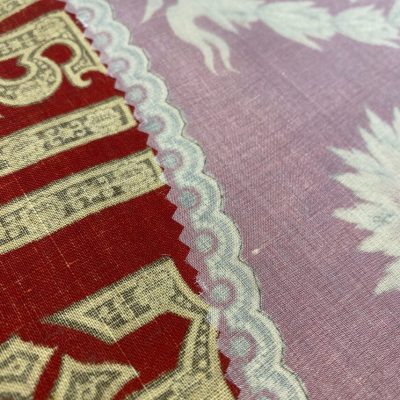
The handkerchief was glued to acidic cardboard, was split torn in a few areas, and had become stiff and fragile. We gently and slowly removed it from the board, upon where it had ‘burnt’ its impression, tested for color fastness, wet cleaned it, and applied a full lining to support all the tears, before pressure framing it for display.
Please visit Interwoven at the Hillwood Museum, open until January 3, 2027.
https://hillwoodmuseum.org/exhibitions/interwoven-tradition-textiles
Keywords: Textile conservation, preservation, textile repair, fragments, reuse, refashioning, lace, quilt, paisley, needlework, Marjorie Merriweather Post, Hillwood, interwoven, textile exhibition
All photos property of Caring for Textiles, unless otherwise noted.
This site uses Akismet to reduce spam. Learn how your comment data is processed.
absolutely astounding work
How fabulous! Thank you for sharing.
You have done some beautiful work for me.