Caring For Textiles

Textiles enrich our lives. We preserve, repair, restore & display.

  • Home
  • About
    • About Us
    • Our Team
    • Selected Clients
    • Articles and Press
    • Testimonials
  • Our Services
    • Types of Textiles
  • Our Work
    • Before and After Treatment
    • Installations
    • Featured Projects
    • International Work
    • Difficult Histories
  • Blog
  • Contact

Portfolio

Howard Hughes Medical Institute, The Pilot Lounge, 2013
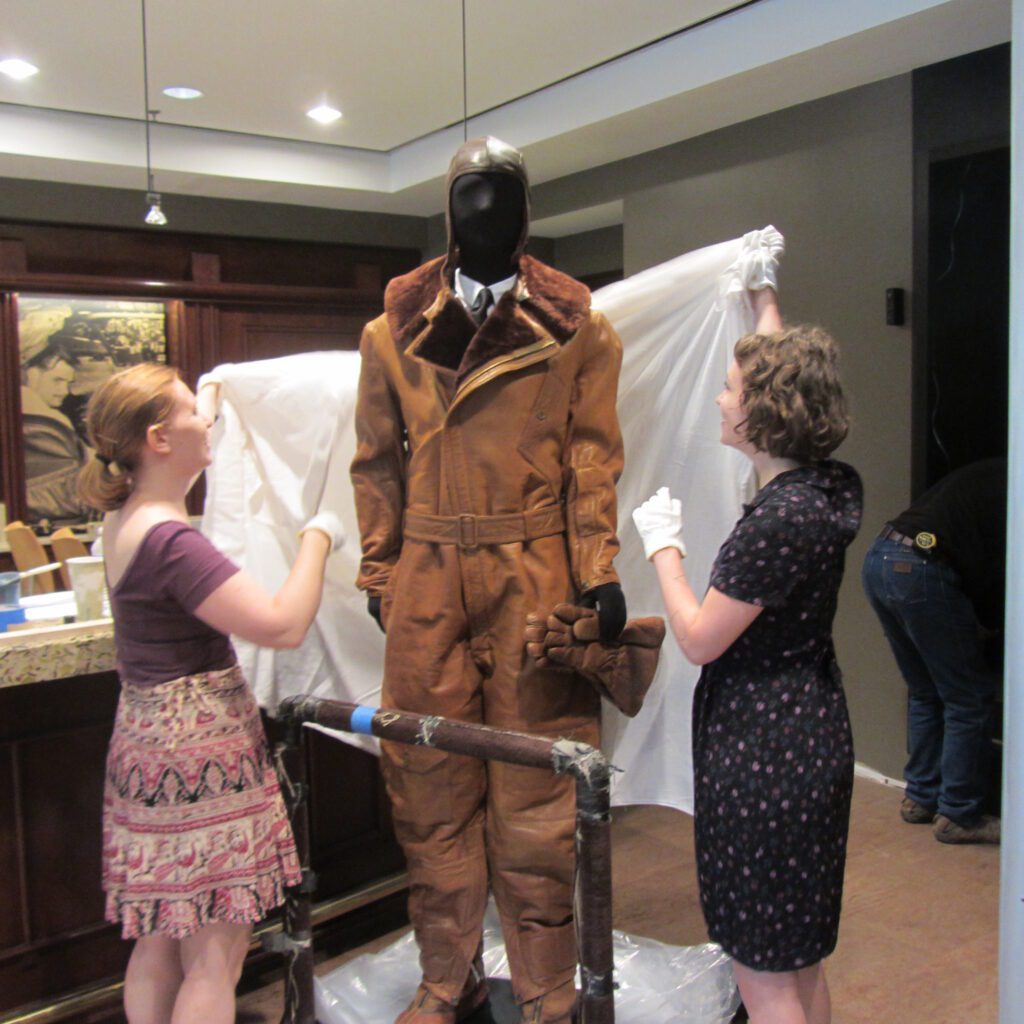
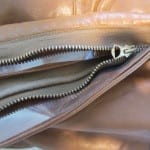
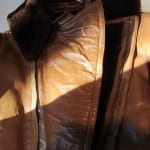
IMG_4023IMG_4090Howard Hughes, legendary aviator and inventor, founder of Hughes Aircraft and the Howard Hughes Medical Institute, and owner of TWA wore this suit in his 1920’s flights. Custom- made by the fabled outdoor apparel firm Abercrombie and Fitch, it is supple leather lined with fur. Conservation treatment involved a lengthy removal of corrosion on all the metal components, due to the reaction between the leather tanning and the metal. A mannequin was crafted and the suit, along with boots, cap, gloves and goggles are preserved for future generations to learn from and enjoy.
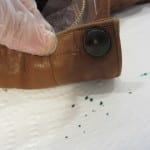
Gloved hand holding leather jacket cuff showing corroded metal button with green residue.
Heavily corroded brass zipper teeth on a leather flight suit.
A tan leather flight suit showing a cleaned brass zipper with pull tab, now free of corrosion, with the open zipper revealing the brown lining and interior pockets of the garment.
The collar and front closure area of a tan leather flight suit after conservation, showing the dark brown fur-lined collar, cleaned brass zipper.

Conservation of Calder Wall Hanging Collection at Berea College October 2012: A Collaborative Teaching and Preservation Project with Berea Museum Studies and Gallery Students
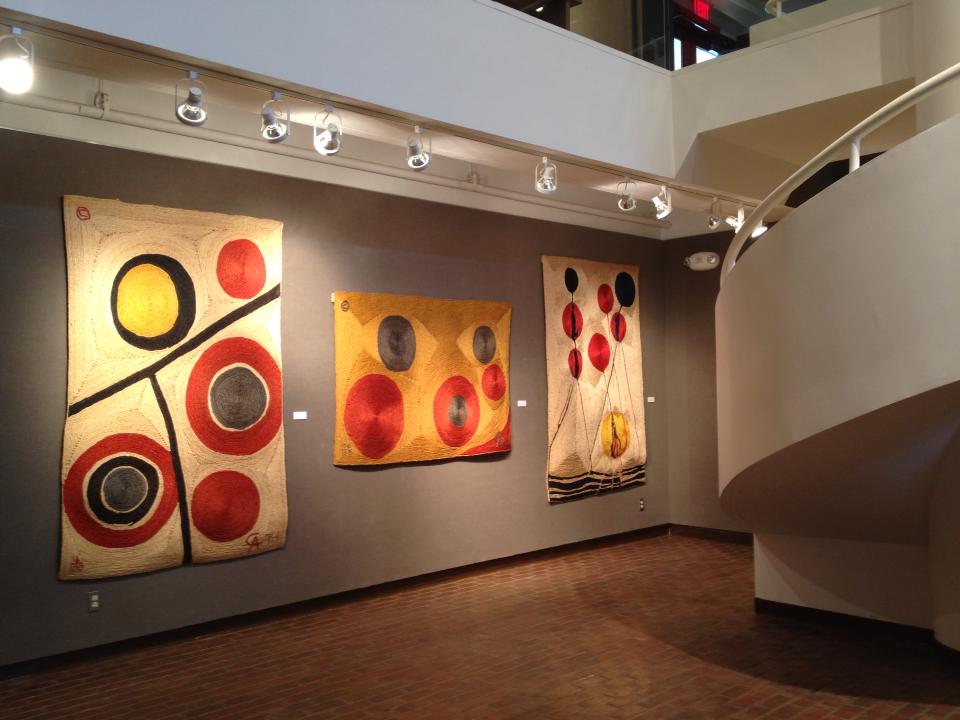
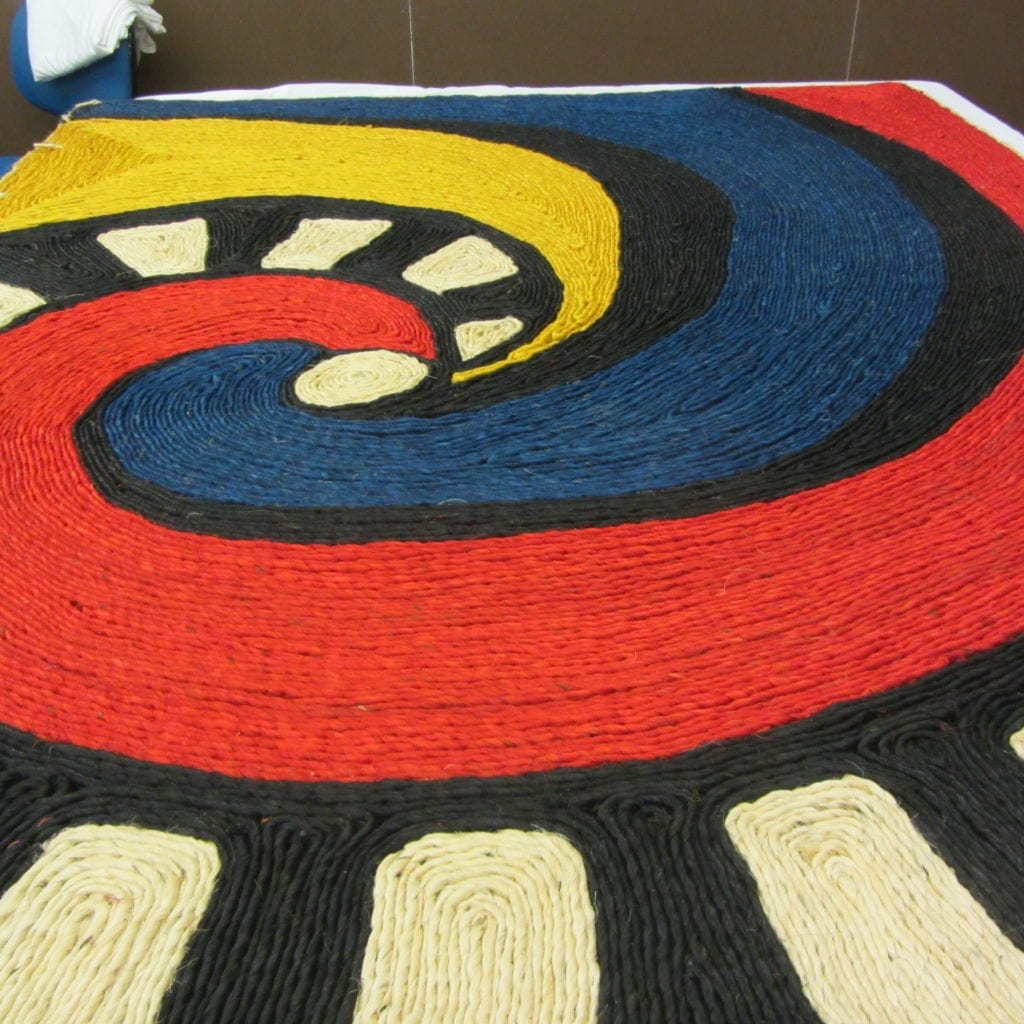
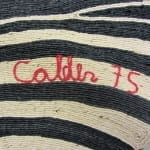
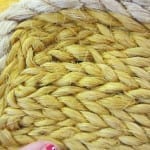
calder_304129_10102647469252243_2003880135_n calder_386This whimsical and colorful series of 14 plant fiber wall hangings were designed by Alexander Calder and then fabricated by hand in Guatemala in 1974 and 1975. They were part of a sustainable relief project, initiated by Mrs. Alvin Meyer) to provide support and livelihood for indigenous people after the earthquake of 1972. Indians in remote villages of Guatemala, who had a long tradition of weaving, used colored hemp to weave these wall hangings. The project aimed to preserve the traditional skills to execute works of modern artists. 100 sets of 14 hangings were produced and sold.

Mirroring the project by Calder and the indigenous people of Nicaragua and Guatemala, the onsite Berea College preservation work was achieved through the collaboration between outside conservation professionals and art-based students. The tradition of the Berea Labor Program was incorporated into the Calder preservation project. Like the craft-based relief project that produced these artifacts, the preservation project was based on a model of sustainability and opportunity.

Each wall hanging was stabilized after years of exposure and wear and tear. Tasks included carefully surface cleaning, repairing where needed, and preparing for both display and storage. A celebratory exhibit of all 14 opened in January 2013.
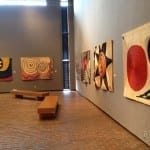
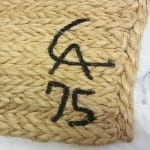
A fiber tapestry corner showing the signature "Calder 75" stitched in red cord against a black and cream striped woven background.
A fiber wall hanging depicting a standing human figure outlined in dark cord.
A museum gallery with five large abstract fiber tapestries featuring bold spiral, circular, and geometric designs in red, black, yellow, and cream, hung along gray walls.
Close-up of thick golden-yellow braided fiber or rope forming a dense, textured surface.
Corner of a natural fiber tapestry showing a hand-stitched artist's monogram and the date "75" in black cord.

httpv://www.youtube.com/watch?v=YUmsXjW9RK0&feature=youtu.be


The Paquin Gown, 2012

This couture gown originated in the Parisian Paquin couture house in the 1920s.  Over time, its delicate silk netting became too fragile and brittle to support the sumptuous decorations of sequins, glass beads, metal threads, and coral. Each exquisite panel of the dress had to be carefully disassembled, lined with new netting, and reconstructed, reattaching all bead-work and embellishments. The treatment of the dress took 450 hours to complete. The dress was gifted to the Fashion Institute of Design and Merchandising in California.
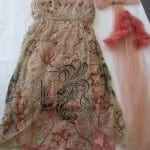
1920s pink beaded net evening dress laid flat with sash and feather trim accessories, after conservation treatment.
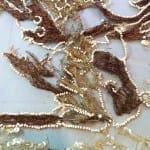
Frayed velvet dragon embroidery and displaced seed beads before conservation.
Before
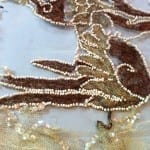
A dragon tail motif on a sheer net evening dress showing brown velvet appliqué outlined with seed bead strands, after conservation treatment.
After

A dragon motif embroidery on a beaded 1920s evening dress before conservation.
Before
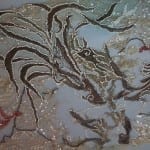
Post-conservation detail of the dragon motif on a pale blue net evening dress, showing the brown velvet and gold metallic thread appliqué re-stabilized and outlined with seed beads.
After
Conservator working on a beaded and sequined evening dress bodice.


The SS Normandie Chair, 2011

The fabled and doomed SS Normandie was the height of luxury at sea during the gilded age. This one-of-a-kind Aubusson tapestry slipper chair arrived at the studio in tatters, with extreme loss throughout its floral motif.  Its conservation required botanical research and close study of similar chairs to reproduce the unique patterns.  Custom dyed wool and yarns were used to carefully reweave the original tapestry and beauty of the chair. This painstaking restoration took over 400 hours.
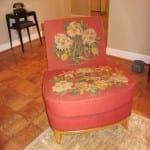
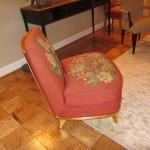
Restored needlework slipper chair with floral seat and back, on parquet floor.
Side view of restored floral needlework slipper chair with gilt frame.
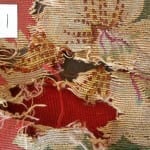
Condition documentation of needlework chair seat area 1, showing severe loss and fraying before conservation.
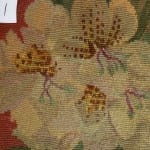
Post-conservation detail labeled "1" showing the previously heavily damaged needlework area now stabilized, with gold, tan, and rust floral motifs re-woven into the repaired zone.

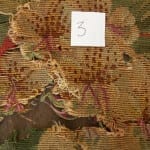
Needlework chair seat area 3 before conservation, showing major loss and exposed backing.
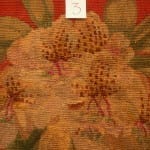
Post-conservation detail labeled "3" showing the previously damaged area of a floral needlework chair seat now in-filled with re-woven tan, gold, and brown wool stitching.
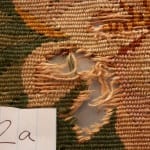
Conservation documentation photo labeled "2a" showing a jagged hole with loose unraveled wool threads in a floral needlework chair seat, with green, tan, and pink surrounding stitching intact.
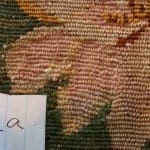
Conservation documentation photo labeled "2a" showing the same floral needlework area after treatment, with the previously damaged hole now stabilized and re-woven with blended pink and tan wool stitching matching the surrounding pattern.


Signature Quilt, 1864, and Lincoln’s Great Coat, 1865

The quilt, made of red, blue and white silk, contains the gall ink signatures of President Lincoln, his Cabinet and many other notable citizens of the day. It was made during the Civil War as an auction item to raise funds for the Philadelphia Sanitary Fair. Conservation included extensive repair to torn silk patches, reconstruction of torn corners, and preparation and securing to a padded slant mount for display.

Lincoln’s Greatcoat was made for his second inaugural in 1865 by Brooks Brothers, NYC. President Lincoln had the coat with him at Ford’s Theater the night he was assassinated. The inside silk lining is quilted with a pattern of eagles holding pennants which read “One Country, One Destiny.” This extraordinary piece of American history was given by Mrs. Lincoln to her husband’s favorite Executive Mansion usher, Mr. Donn, in 1865. Through his family, it passed down to the US Park Service.


Lou Gehrig’s 1931 Yankee’s wool jersey

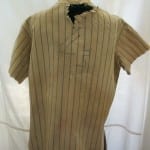
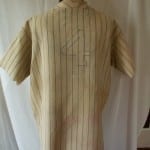
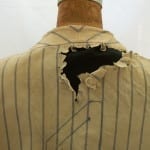
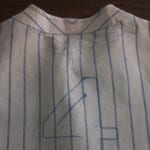
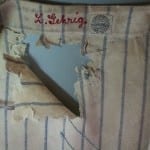
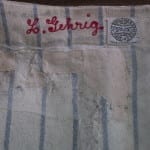
This priceless piece of sports memorabilia was on its way to auction to fetch the big bucks but took a little diversion for a pre-sale cleaning. Oops, perhaps the bleach or other agents were too strong for the old wool and stains. The disfiguring holes in the back, neck, and shoulders were shoddily disguised. In order to regain some of its value, Caring for Textiles removed the damaging repairs, realigned the remains of the original wool, and used a very lightweight support cloth and similar wool to reconstruct the large areas of loss.

Full back view of Lou Gehrig's deteriorated jersey before conservation.
Before
Back view of Lou Gehrig's number 4 jersey after conservation on a mannequin.
After
Large hole in the back of Lou Gehrig's jersey before conservation, mounted on a mannequin.
Before
Upper back of Lou Gehrig's jersey showing fraying and the number 4 after conservation treatment.
After
Conservation treatment of a large hole in Lou Gehrig's baseball jersey.
Before
Interior of Lou Gehrig's jersey after conservation, showing stabilizing patches.
After

Copyright © 2026 Caring For Textiles. All rights reserved.
Terms and Conditions

Copyright © 2014 Caring For Textiles

Accessibility Adjustments

Powered by OneTap

How long do you want to hide the toolbar?
Hide Toolbar Duration
Select your accessibility profile
Vision Impaired Mode
Enhances website's visuals
Seizure Safe Profile
Clear flashes & reduces color
ADHD Friendly Mode
Focused browsing, distraction-free
Blindness Mode
Reduces distractions, improves focus
Epilepsy Safe Mode
Dims colors and stops blinking
Content Modules
Font Size

Default

Line Height

Default

Color Modules
Orientation Modules
Caring For Textiles
Manage Cookie Consent
To provide the best experiences, we use technologies like cookies to store and/or access device information. Consenting to these technologies will allow us to process data such as browsing behavior or unique IDs on this site. Not consenting or withdrawing consent, may adversely affect certain features and functions.
Functional Always active
The technical storage or access is strictly necessary for the legitimate purpose of enabling the use of a specific service explicitly requested by the subscriber or user, or for the sole purpose of carrying out the transmission of a communication over an electronic communications network.
Preferences
The technical storage or access is necessary for the legitimate purpose of storing preferences that are not requested by the subscriber or user.
Statistics
The technical storage or access that is used exclusively for statistical purposes. The technical storage or access that is used exclusively for anonymous statistical purposes. Without a subpoena, voluntary compliance on the part of your Internet Service Provider, or additional records from a third party, information stored or retrieved for this purpose alone cannot usually be used to identify you.
Marketing
The technical storage or access is required to create user profiles to send advertising, or to track the user on a website or across several websites for similar marketing purposes.
  • Manage options
  • Manage services
  • Manage {vendor_count} vendors
  • Read more about these purposes
View preferences
  • {title}
  • {title}
  • {title}
Caring For Textiles
Manage Cookie Consent
To provide the best experiences, Caring For Textiles uses technologies like cookies to store and/or access device information. Consenting to these technologies will allow us to process data such as browsing behavior or unique IDs on this site. Not consenting or withdrawing consent may change your experience on our site with certain features and functions.
Functional Always active
The technical storage or access is strictly necessary for the legitimate purpose of enabling the use of a specific service explicitly requested by the subscriber or user, or for the sole purpose of carrying out the transmission of a communication over an electronic communications network.
Preferences
The technical storage or access is necessary for the legitimate purpose of storing preferences that are not requested by the subscriber or user.
Statistics
The technical storage or access that is used exclusively for statistical purposes. The technical storage or access that is used exclusively for anonymous statistical purposes. Without a subpoena, voluntary compliance on the part of your Internet Service Provider, or additional records from a third party, information stored or retrieved for this purpose alone cannot usually be used to identify you.
Marketing
The technical storage or access is required to create user profiles to send advertising, or to track the user on a website or across several websites for similar marketing purposes.
  • Manage options
  • Manage services
  • Manage {vendor_count} vendors
  • Read more about these purposes
View preferences
  • {title}
  • {title}
  • {title}