Caring For Textiles

Textiles enrich our lives. We preserve, repair, restore & display.

  • Home
  • About
    • About Us
    • Our Team
    • Selected Clients
    • Articles and Press
    • Testimonials
  • Our Services
    • Types of Textiles
  • Our Work
    • Before and After Treatment
    • Installations
    • Featured Projects
    • International Work
    • Difficult Histories
  • Blog
  • Contact

Let’s Hear it for the Boys #3: The All-American Installment

March 21, 2016 By Julia 3 Comments

The final post in Julia’s three-part series dedicated to the gentleman.

If you missed my first two posts on ‘man-centric’ textiles (or if you just loved them so much and you want to reread) – you can find the first post here, and the second post can be found here.


Over the years, Caring for Textiles has had the opportunity to conserve the textiles of some of America’s most well-known and historically significant men – including our founding father George Washington, the celebrated President Abraham Lincoln, and baseball greats Babe Ruth and Lou Gehrig. It has been both a privilege and challenge to work on iconic pieces that are part of the fabric of our culture and history.

I’m always incredibly nervous when treasures like these arrive for treatment. All intervention must be scrupulously considered – each touch, stitch, surface cleaning or added material is carefully weighed; I rigorously maintain that less is better.


George Washington’s Waistcoats

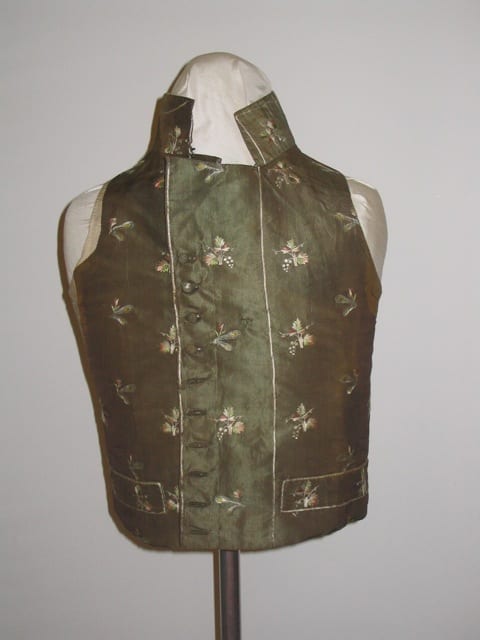
Imagine holding George Washington’s French silk embroidered waistcoat in your hands! I had the good fortune to work on three of these amazing articles of clothing; it makes one tremble to think the great man himself wore these very pieces some 250 years ago.
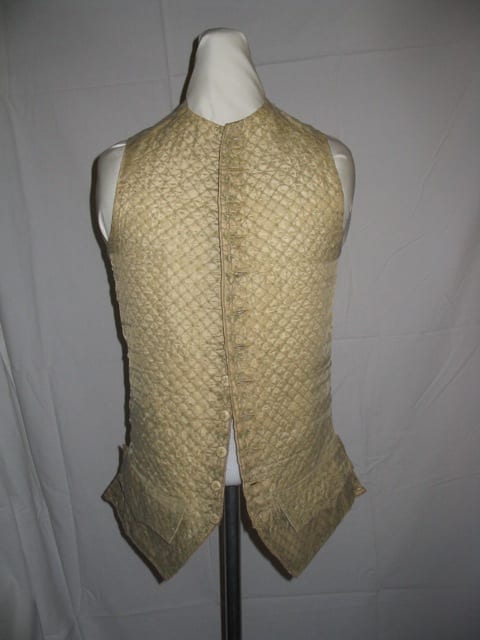
This delicate French embroidered silk waistcoat was completely shattered and powdering. A sheer overlay of polyester stabiltex was used to encapsulate the entire front of the silk, and then stitched along the same embroidery seam lines beneath. Once stabilized, a customized half form was fabricated for temporary display at GW Mount Vernon Estate and Museum.

George Washington's olive green French silk embroidered waistcoat mounted on a custom form after conservation.
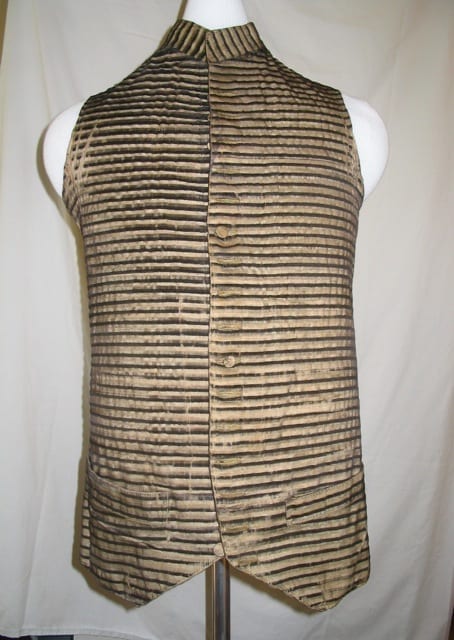
These two waistcoats were in better condition, and received selective stitch repairs…
George Washington's gold and black horizontally striped silk waistcoat mounted on a custom half form after conservation treatment and stabilization.
… protective linings, and customized forms for display.


Abraham Lincoln’s GreatcoatAL1
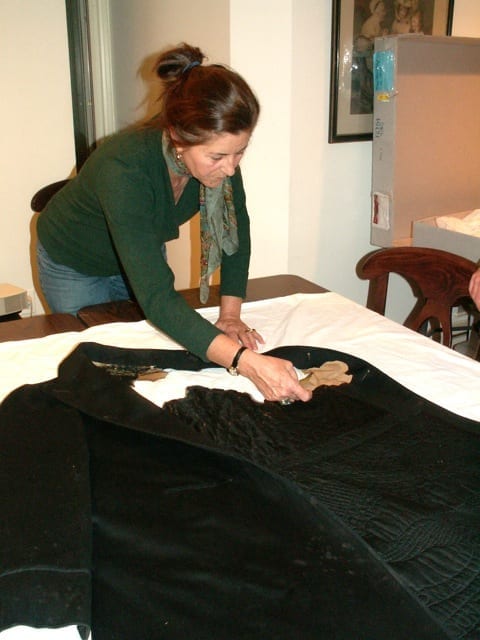
There are many moments of satisfaction in my work, but delicately stitching the tears in the coat that President Lincoln wore the night he was assassinated – magical and overwhelming!
This is when I am convinced of the importance of textile conservation, and how it contributes to our shared history for generations to come.

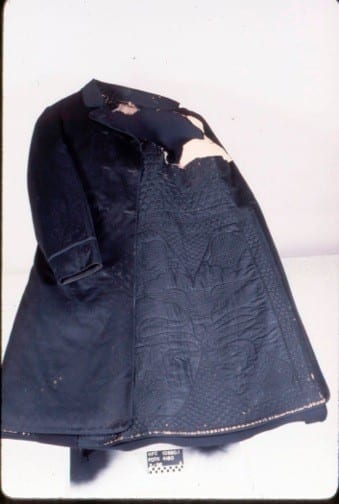
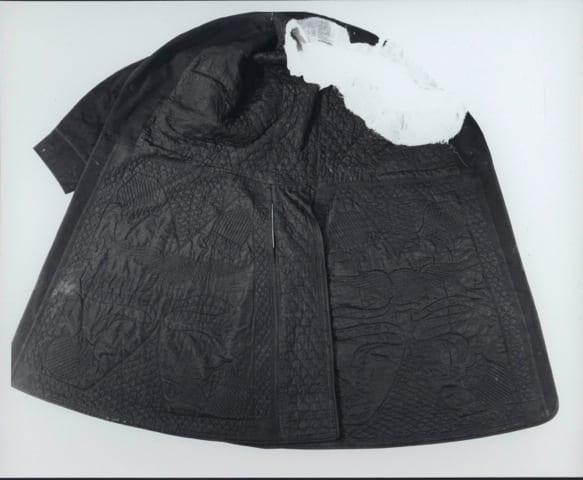
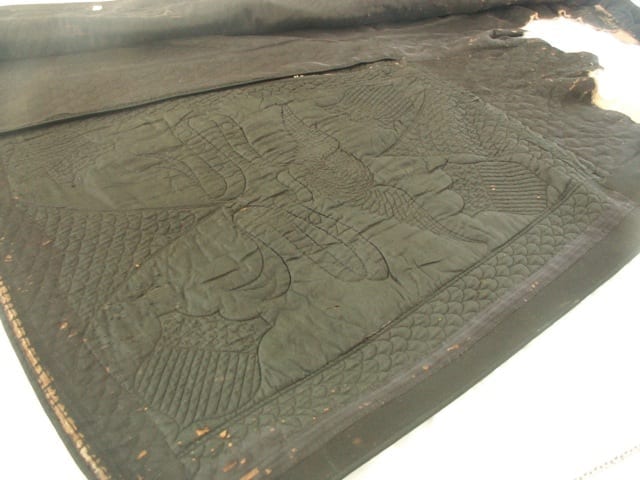
This greatcoat was made by New York City’s Brooks Brothers in 1864 on the occasion of Lincoln’s second inaugural. The patriotic themed lining was hand-quilted by one of the firm’s best stitchers who, having retired, executed the commission as piece-work from her home. The great coat exhibited at Ford’s Theatre is an exact replica made by Brooks Brothers. The original coat is carefully preserved for scholarship and posterity.

The coat was draped over the back of the President’s chair at Ford’s Theater the night he was killed.
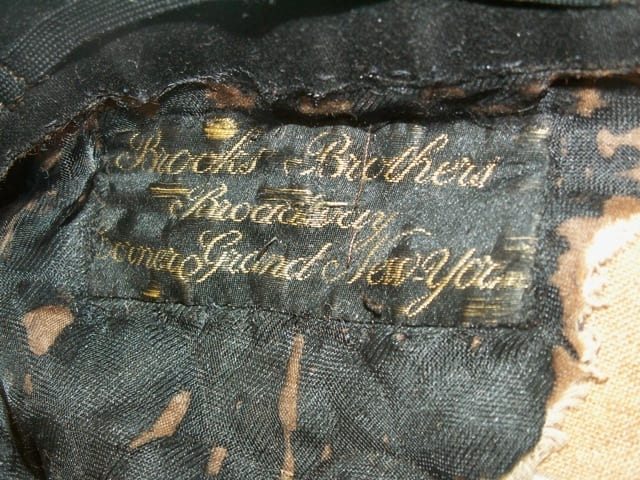
 

Deteriorated Brooks Brothers maker's label inside Abraham Lincoln's greatcoat, reading "Brooks Brothers, Broadway, corner Grand, New York" in gold script on black silk.
Hand-quilted patriotic lining of Lincoln's greatcoat, showing eagles, shields, and other American motifs quilted into the black silk fabric.


Abraham Lincoln's greatcoat showing the exterior and open interior with quilted lining and missing shoulder area.
Abraham Lincoln's greatcoat laid open, showing the full quilted patriotic lining and the large area of missing fabric at the shoulder.

The missing sleeve and shoulder are a result of ‘souvenir takers,’ who blithely took pieces of the coat, as well as the bed sheets and wallpaper of the chamber where Lincoln lay dying. Mary Todd gave the coat to Lincoln’s favorite valet in the White House, who held it in safe-keeping with the family until his heirs sold it to the Park Service in 1968.
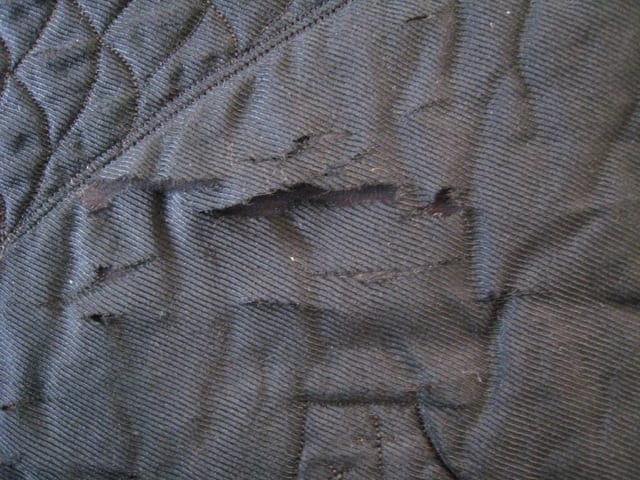
Exterior wool-silk fabric of Lincoln's greatcoat showing multiple slits and tears caused by light exposure and display deterioration.
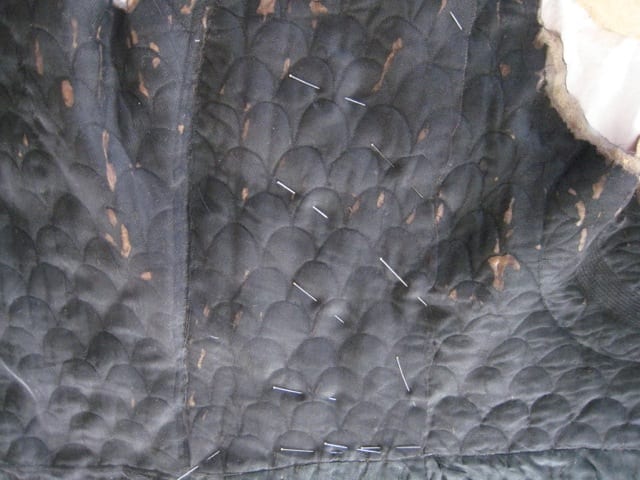
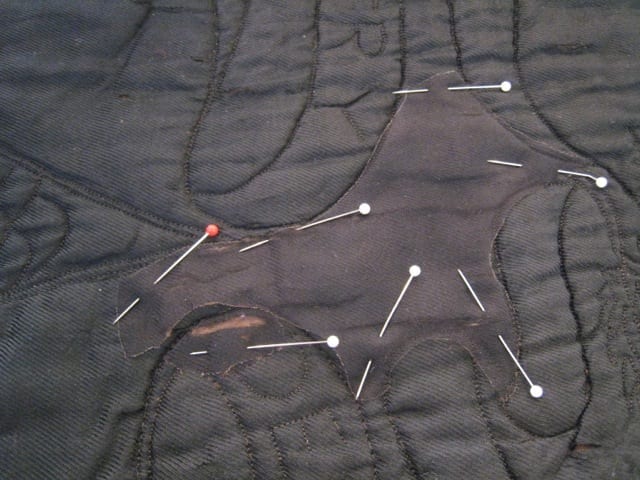
Lincoln's greatcoat lining during conservation, showing a sheer stabiltex patch pinned over an area of fabric loss in the quilted black silk.

Since it has been displayed with one side of the coat open to reveal the unique inscription in embroidery, the silk wool fabric has disintegrated from light and exposure. Several conservation campaigns have included applying selective overlays of sheer polyester stabiltex over these fragile areas.
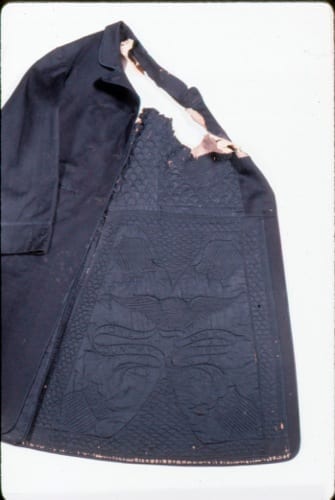
Abraham Lincoln's greatcoat showing the black hand-quilted patriotic lining and the missing shoulder and sleeve area.
Black quilted lining of Abraham Lincoln's greatcoat during conservation, with pins holding a sheer stabiltex overlay in place prior to stitching.
Detail of stabiltex overlays, in process of stitching.


Babe Ruth
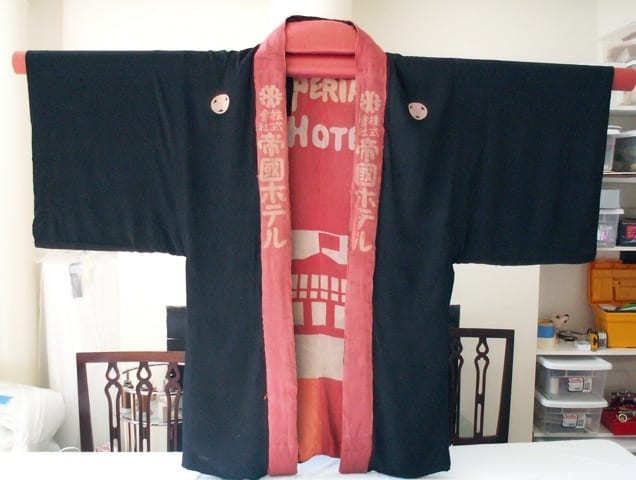
BR_1“Beibu Rusu” is how half a million excited Japanese fans greeted Babe Ruth when he arrived for the All Star Games in 1934.

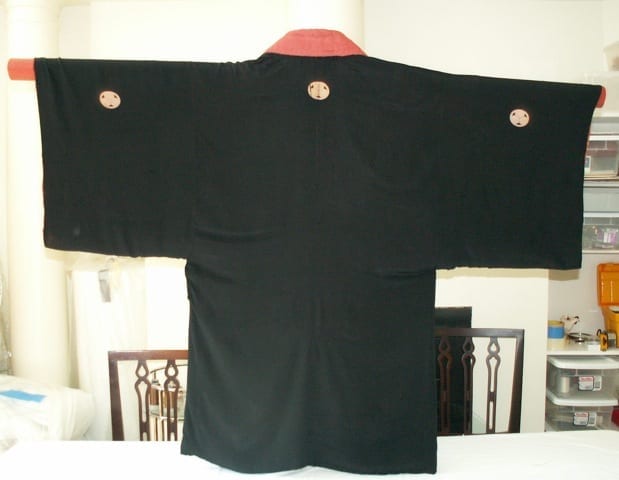
Ruth acquired this Japanese ‘happy coat’ when staying in Frank Lloyd Wright’s famous Tokyo Imperial Hotel (circa 1922).
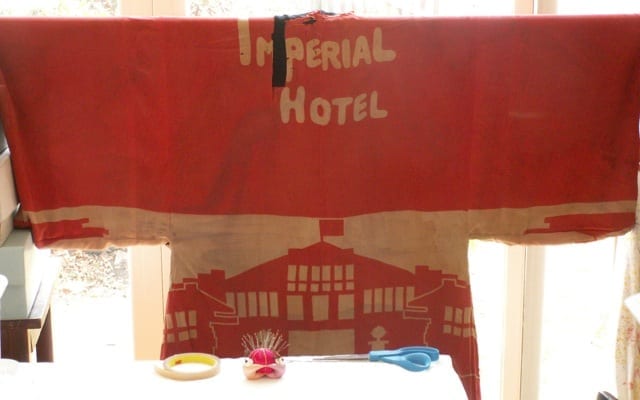
Coat interior with the hotel name and bold 1930’s deco illustration

Coat interior with the hotel name and bold 1930’s deco illustration

Julia Ruth Stevens, Ruth’s daughter, recounts how, when Pearl Harbor was bombed, Babe took his Japanese treasures and threw them out the window. Luckily for us, his family retrieved them!

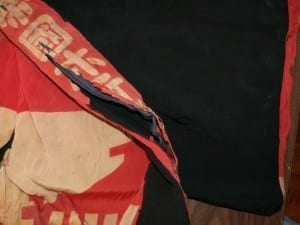
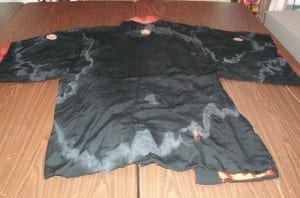
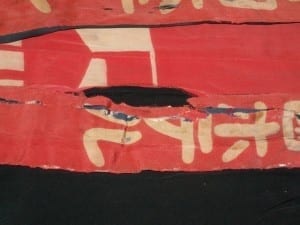
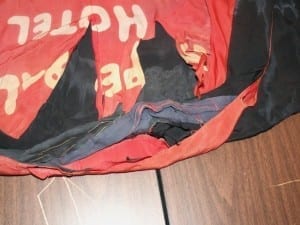
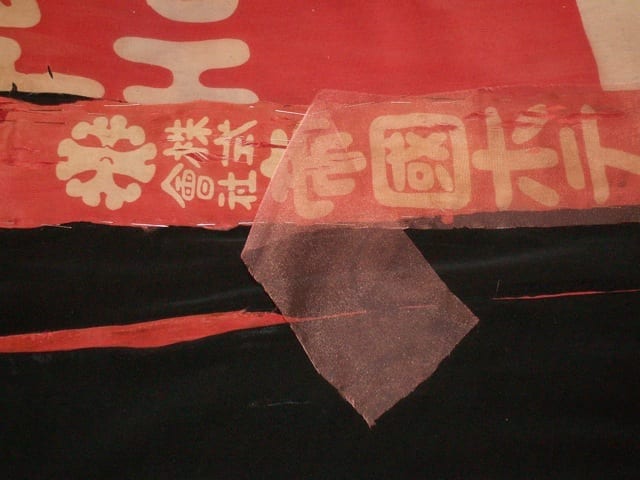
Encrusted with dirt, stains, and full of cigar holes – this textile required more than 200 hours of conservation cleaning and treatment. It was both wet and solvent cleaned, and then reconstructed with insertions of orange and black silks, and overlays of sheer stabilitex.

A large tear in the interior lining of Babe Ruth's happy coat before conservation, showing the split between the red printed fabric and black silk body.
Coat condition before conservation
Back view of Babe Ruth's Japanese happy coat before conservation, showing heavy overall soiling and white staining across the black silk exterior.
A torn and splitting seam on the red and black interior band of Babe Ruth's Japanese happy coat, with Japanese text visible, before conservation.
Heavily deteriorated hem area of Babe Ruth's Japanese happy coat before conservation, showing shredded red and black silk with multiple layers of damage.


Detail of Babe Ruth's Japanese happy coat during conservation, showing a sheer stabiltex overlay patch applied over the red and black silk band with Japanese text.
In process…
Babe Ruth's Japanese happy coat displayed from the back after conservation.
…complete!


1930s Lou Gehrig’s jersey 1930’s
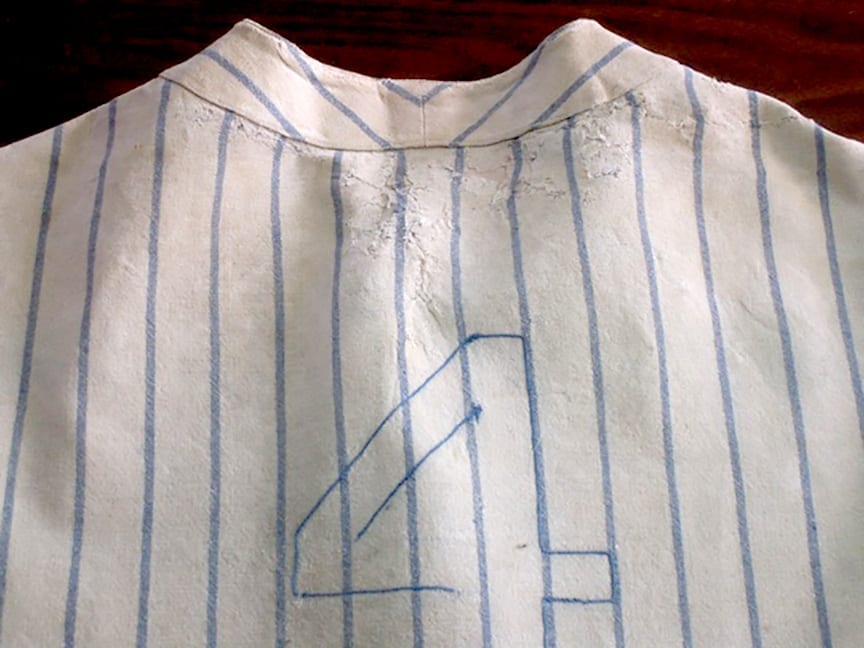
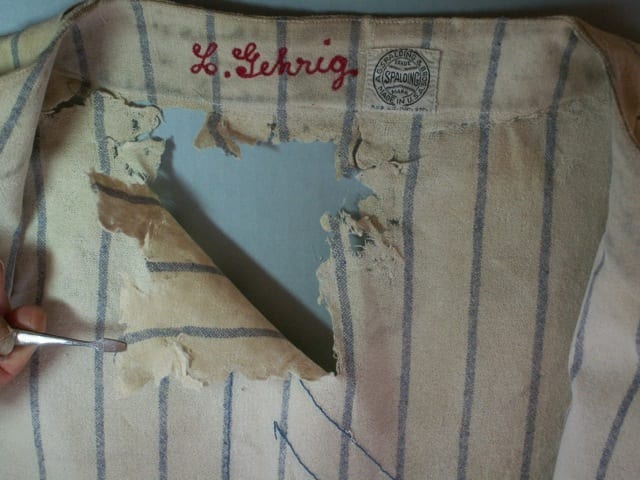
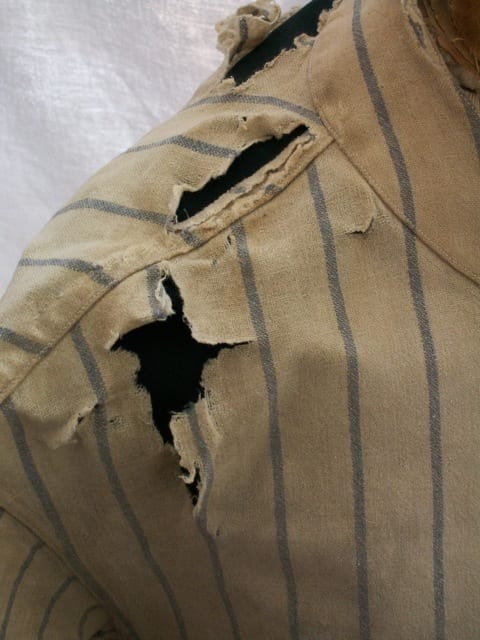
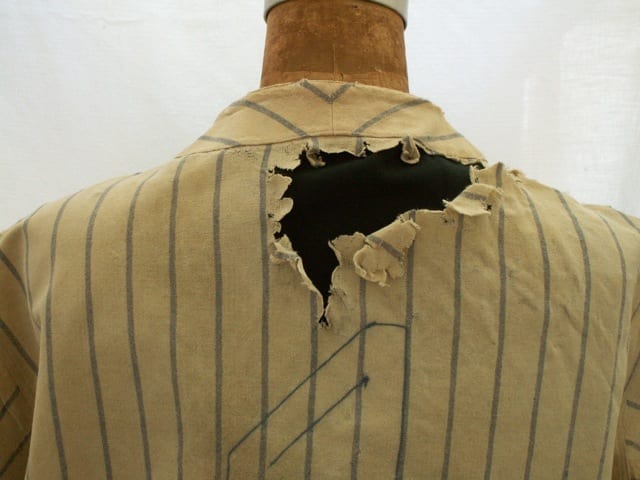
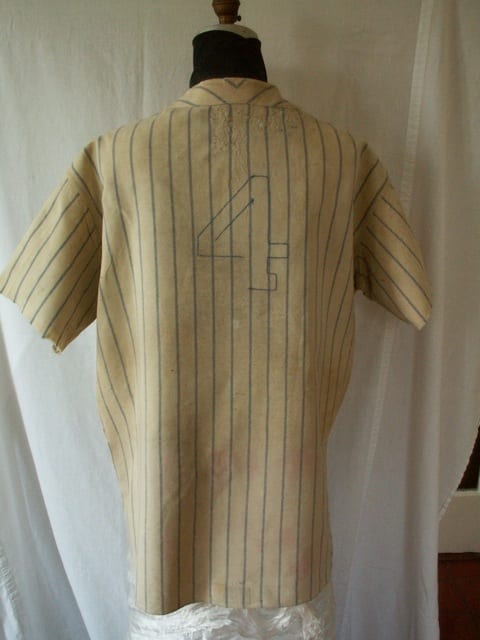
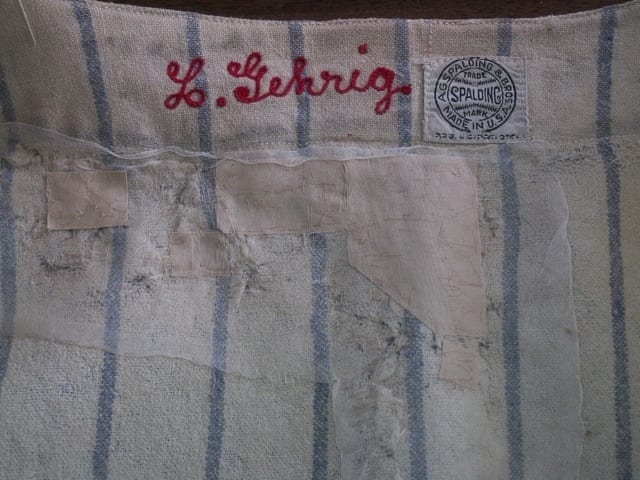
LG_1Made of wool, Gehrig’s NY Yankees #4 jersey came to us in overall good condition. Prior to arriving at Caring for Textiles however, the jersey had been aggressively cleaned, which had caused large holes and tears in the shoulder and back.

Reconstruction included removing coarse repairs, re-aligning the wool warps and wefts, using a thin support fabric, and re-weaving and couching down the original pieces of the fibers and cloth.

Upon completion, all the neighborhood kids came to Caring for Textiles for a ceremonial viewing. Home run!


Interior view of Lou Gehrig's jersey before conservation, showing a large damaged area near the collar being examined with tweezers, with the "L. Gehrig" name label visible.
Damage…
Close-up of the heavily damaged shoulder area of Lou Gehrig's Yankees jersey before conservation, with large holes and frayed wool fibers.
…from aging…
Back of Lou Gehrig's Yankees jersey before conservation, showing a large ragged hole caused by aggressive prior cleaning.
…and aggressive cleaning.

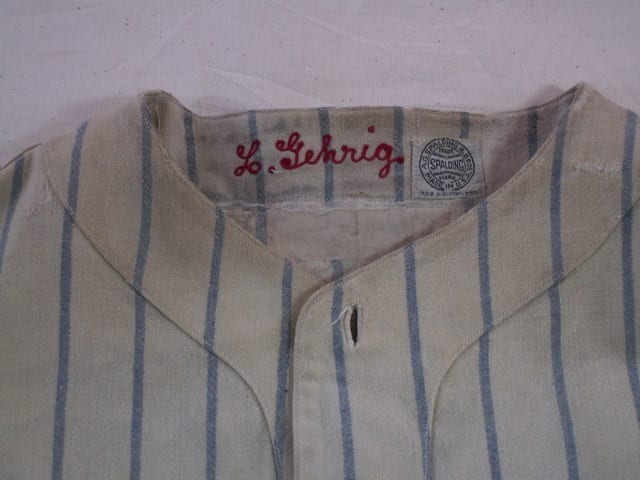
The collar and interior label of Lou Gehrig's conserved Yankees jersey, showing the "L. Gehrig" name tag and Spalding maker's mark.
After…
Back view of Lou Gehrig's NY Yankees #4 jersey mounted on a dress form after conservation, showing the restored number and overall stabilized condition.
Interior of Lou Gehrig's jersey showing the red embroidered "L. Gehrig" name label, Spalding manufacturer's tag, and stabilized repair patches after conservation.
Ready to step up to the plate!


I hope you’ve enjoyed reading about these pieces – I’ve had such fun looking back at these iconic pieces. I’m honored to be able to contribute to their longevity, and hope that they will be around for many generations to enjoy.

Source:

http://newyork.cbslocal.com/2014/07/29/by-the-numbers-little-known-facts-about-the-babe-from-julia-ruth-stevens/

Filed Under: News Tagged With: Abraham Lincoln, Babe Ruth, conservation, conservation treatments, embroidery, encapsulation, George Washington, GW Mount Vernon Estate and Museum, Lincoln assasination, Lou Gherig, New York City’s Brooks Brothers, NY Yankees #4, preservation, preservation of silk, protective netting, restoration, shattered silk, stabilitex, stabilization, textile, textile conservation, Tokyo Imperial Hotel, waistcoat

Comments

  1. Ian D MacLeod says

    March 22, 2016 at 12:45 am

    Wow, Julie you deserve a Congressional Medal of Honour for this remarkably brilliant textile conservation work. Most impressive and sorry not to be able to discuss in detail at the moment as I am heading off to go to some meetings in the city. Happy Easter parades in DC and God Bless America!

    Reply
  2. Penny Clifton says

    March 23, 2016 at 3:19 pm

    Amazing work Julia! And what an honor to be entrusted with their care. You’re the best!

    Reply
  3. Tom Bethell says

    March 25, 2016 at 2:58 pm

    Julia — Katharine and I have long been in awe of your work, but as another baseball season approaches I’m especially moved by your restoration of Lou Gehrig’s uniform. He was my childhood hero, my first bat was a Lou Gehrig Louisville Slugger, and he was a model of courage as he faced his tragic death in 1941, a few days shy of his 38th birthday. Kudos for bringing his uniform back to life 75 years later!

    Reply

Leave a Reply Cancel reply

Your email address will not be published. Required fields are marked *

This site uses Akismet to reduce spam. Learn how your comment data is processed.

Copyright © 2026 Caring For Textiles. All rights reserved.

Copyright © 2014 Caring For Textiles

Caring For Textiles
Manage Cookie Consent
To provide the best experiences, we use technologies like cookies to store and/or access device information. Consenting to these technologies will allow us to process data such as browsing behavior or unique IDs on this site. Not consenting or withdrawing consent, may adversely affect certain features and functions.
Functional Always active
The technical storage or access is strictly necessary for the legitimate purpose of enabling the use of a specific service explicitly requested by the subscriber or user, or for the sole purpose of carrying out the transmission of a communication over an electronic communications network.
Preferences
The technical storage or access is necessary for the legitimate purpose of storing preferences that are not requested by the subscriber or user.
Statistics
The technical storage or access that is used exclusively for statistical purposes. The technical storage or access that is used exclusively for anonymous statistical purposes. Without a subpoena, voluntary compliance on the part of your Internet Service Provider, or additional records from a third party, information stored or retrieved for this purpose alone cannot usually be used to identify you.
Marketing
The technical storage or access is required to create user profiles to send advertising, or to track the user on a website or across several websites for similar marketing purposes.
  • Manage options
  • Manage services
  • Manage {vendor_count} vendors
  • Read more about these purposes
View preferences
  • {title}
  • {title}
  • {title}
Caring For Textiles
Manage Cookie Consent
To provide the best experiences, Caring For Textiles uses technologies like cookies to store and/or access device information. Consenting to these technologies will allow us to process data such as browsing behavior or unique IDs on this site. Not consenting or withdrawing consent may change your experience on our site with certain features and functions.
Functional Always active
The technical storage or access is strictly necessary for the legitimate purpose of enabling the use of a specific service explicitly requested by the subscriber or user, or for the sole purpose of carrying out the transmission of a communication over an electronic communications network.
Preferences
The technical storage or access is necessary for the legitimate purpose of storing preferences that are not requested by the subscriber or user.
Statistics
The technical storage or access that is used exclusively for statistical purposes. The technical storage or access that is used exclusively for anonymous statistical purposes. Without a subpoena, voluntary compliance on the part of your Internet Service Provider, or additional records from a third party, information stored or retrieved for this purpose alone cannot usually be used to identify you.
Marketing
The technical storage or access is required to create user profiles to send advertising, or to track the user on a website or across several websites for similar marketing purposes.
  • Manage options
  • Manage services
  • Manage {vendor_count} vendors
  • Read more about these purposes
View preferences
  • {title}
  • {title}
  • {title}